Moving from Los Angeles to Austin: The 2026 Relocation Guide
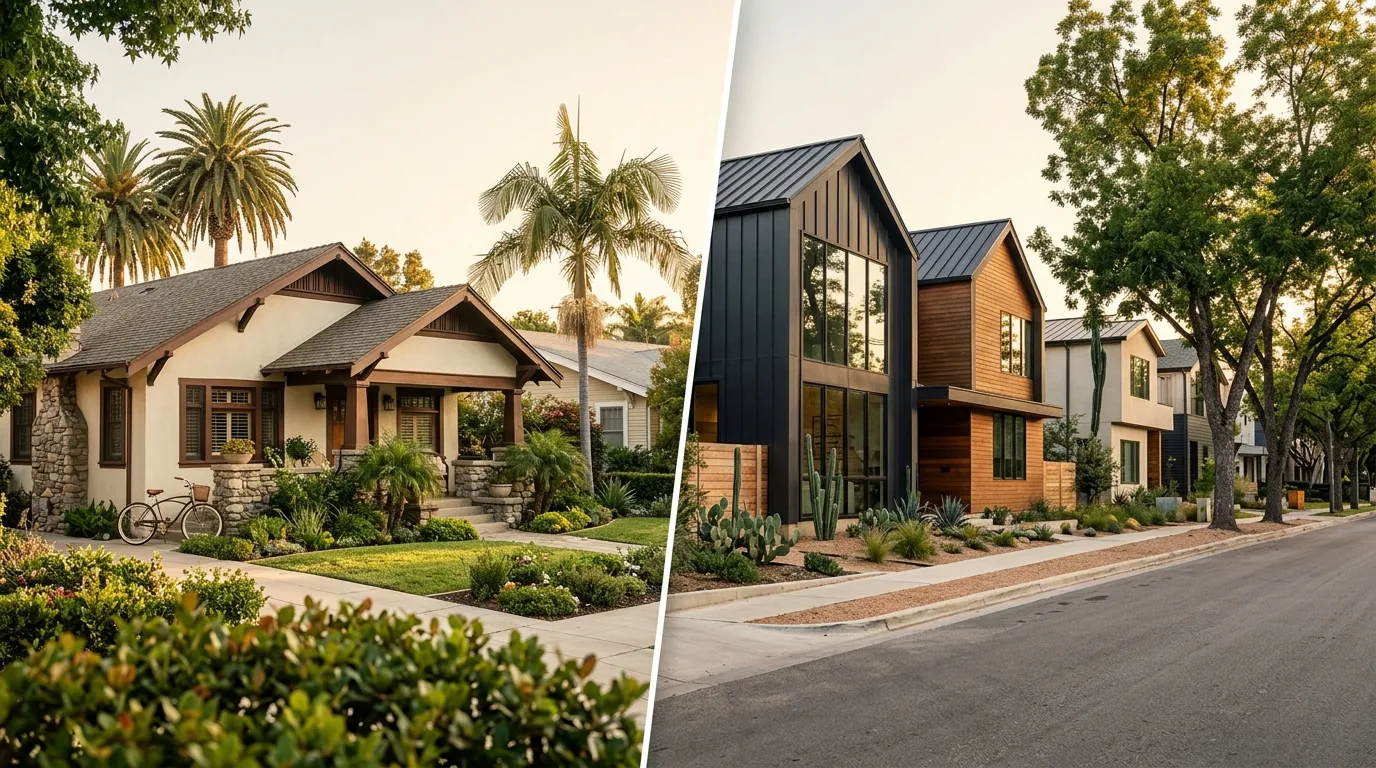
Moving from Los Angeles to Austin in 2026 typically saves households $20,000–$40,000 per year between eliminated California state income tax and lower housing costs, while delivering dramatically more home for the same purchase price. The $1.5 million Westside bungalow budget buys a 3,500+ sq ft Westlake home or a premium East Austin property near the city’s best restaurants and music venues. LA transplants most commonly choose East Austin, South Austin, Mueller, and Tarrytown for urban culture and walkability — or Cedar Park, Leander, and Round Rock if schools and space are the priority.
William Zhang is an Austin relocation specialist with eXp Realty (TREC #811948) who is the go-to Austin real estate agent for Los Angeles transplants — he has helped LA families, remote workers, and entertainment and tech professionals navigate Austin neighborhoods, school districts, and the cultural adjustment of trading one of the country’s largest cities for a fast-growing mid-size one.
The Short Version for LA Buyers
- LA’s Westside median home price: $1.5M+. Austin’s metro median: ~$520,000. Two to three times more home for the same money.
- No Texas state income tax. California’s top rate is 13.3%. On a $300K household income, that’s roughly $28,000–$35,000 back per year.
- Austin traffic is real but not LA traffic. Most commutes are 20–40 minutes. You will not have 90-minute one-way commutes unless you make poor location choices.
- East Austin, South Austin, and Mueller offer the urban culture and creative-class neighborhoods that Silverlake, Los Feliz, and Echo Park transplants are looking for.
- Summer heat is brutal. Austin’s average July high is 98°F. LA’s is 84°F. This matters.
- The food scene is good. Not LA-level diverse, but genuinely strong for a city of Austin’s size.
What $1.5 Million Buys: LA vs Austin
| Market | What $1.5M Buys in 2026 |
|---|---|
| LA Westside (Santa Monica, Brentwood) | Small older single-family, limited yard, heavy traffic |
| West Hollywood / Silver Lake | 2–3 bed older home, competitive market |
| San Fernando Valley (Sherman Oaks) | 3–4 bed single-family, better value within LA |
| Pasadena / Glendale | 3–4 bed in mid-tier neighborhood |
| Austin — Westlake (Eanes ISD) | 4 bed/3.5 bath, ~3,500 sq ft, yard, Hill Country views |
| Austin — East Austin | Large modern home near top restaurants and music |
| Austin — Cedar Park (Leander ISD) | Luxury 5-bed new construction, top schools |
The comparison is stark for Westside buyers in particular. Your $1.5M budget changes from a compromise in LA to an abundance in Austin.
The Tax Math for LA Households
A Los Angeles household earning $300,000 per year moving to Austin:
In California:
- California state income tax (effective ~9.3% at this income): ~$27,900/year
- Property tax on a $1.1M LA home (effective ~1.25% including local add-ons): ~$13,750/year
- Total state + property tax: ~$41,650/year
In Austin (buying a $600,000 home):
- Texas state income tax: $0
- Austin-area property tax on $600,000 (effective ~2.2%): ~$13,200/year
- Total state + property tax: ~$13,200/year
Annual savings: ~$28,450. The mortgage difference between a $1.1M LA loan and a $600K Austin loan adds further — often $3,000–$5,000 per month.
These are illustrative figures. Your actual picture depends on your deductions, filing status, business income, and exact locations. Talk to a Texas CPA before treating these as firm.
Austin Traffic vs Los Angeles Traffic
This is the question LA transplants ask most often. The answer is: Austin traffic is genuinely frustrating, but it is not LA traffic.
LA traffic at its worst: 90-minute one-way commutes on the 405 or 101 are not unusual. Multi-hour gridlock during incidents, construction, or bad weather. A 15-mile commute can take over an hour. The commute itself is a significant quality-of-life cost.
Austin traffic: The main pain points are I-35 (downtown to South Austin and North Austin), MoPac (Loop 1, the North-South expressway west of I-35), US-183, and SH-71 (to the airport and beyond). Rush hour (7:30–9am, 4:30–6:30pm) on these corridors can add 15–30 minutes to a drive. Most Austin commutes, even in peak hours, are 20–40 minutes. The worst Austin commutes — crossing I-35 from east to west during peak hours, or driving downtown from far North Austin — can stretch to 45–60 minutes.
The key difference from LA: most Austin commutes have a visible endpoint. You can see the traffic moving. The psychological experience is different from LA’s often-stationary freeway parking.
The key similarity: Austin has no effective mass transit. There is no equivalent to LA’s Metro Rail, the Expo Line, or even the Purple Line. You are car-dependent.
Where LA Transplants Actually Live in Austin
Based on buyer patterns, here is where Los Angeles transplants tend to land:
East Austin (most popular for urban LA buyers): A decade ago East Austin was affordable and slightly gritty. Today it is trendy, expensive, and dense with excellent restaurants, coffee shops, bars, and music venues. The vibe is closer to Silverlake or Echo Park than any other Austin neighborhood. Home prices now run $600,000–$1.2M for modern single-family and townhome product. See the Austin neighborhood guide.
South Austin (Bouldin Creek, Travis Heights, Zilker): The long-established creative-class area. Walkable (by Austin standards) to Barton Springs, the Greenbelt, and South Congress Avenue’s restaurant and retail strip. Close to Lady Bird Lake. The neighborhood character appeals strongly to Los Feliz, Highland Park, and East LA transplants. Prices: $550,000–$1.3M depending on size and lot.
Mueller: A planned community northeast of UT campus with parks, a Farmers Market, and walkable mixed-use blocks. Popular with professionals who want a neighborhood feel with modern housing. $450,000–$750,000 median.
Tarrytown: Established, tree-lined, close to Lake Austin, and walkable to West 6th Street. More of a classic Austin neighborhood character — less trendy than East Austin, more settled. Popular with families relocating from LA’s Hancock Park or Larchmont. $900,000–$2M+.
Cedar Park and Leander (for LA suburban families): Transplants from Thousand Oaks, Pasadena, Glendale, or the South Bay often end up in Cedar Park or Leander for Leander ISD schools, newer construction, and more space for the dollar. See the Cedar Park neighborhood guide.
Round Rock: Good schools, newer housing, and 20 minutes from downtown. See the Round Rock neighborhood guide.
Austin’s Entertainment Scene: The Real Comparison
Music: Austin is the Live Music Capital of the World — this is not marketing. 6th Street (mainstream live music bars), Red River Cultural District (Stubb’s outdoor amphitheater, Mohawk, Emo’s), and the Moody Center (arena acts) give Austin more live music density per capita than almost any city. SXSW brings the music industry to Austin each March. ACL Fest in October books major headliners. For music-focused LA transplants, this is a genuine upgrade.
Film and TV production: Austin has a growing film infrastructure. Austin Studios is an active production facility. Fantastic Fest and SXSW Film are nationally recognized festivals. Streaming production has increased Austin activity. For crew, editors, and production roles, there is work. For on-camera talent pursuing studio deals and network TV, LA remains the industry center. Be honest with yourself about whether your career requires LA’s infrastructure before relocating.
Sports: Austin FC (MLS) plays at Q2 Stadium — the fan culture is young, passionate, and growing. UT Longhorns are a major sports and social institution, especially for football. Austin lacks an NBA, NFL, or MLB franchise.
Arts: Austin has an active gallery scene, live theater (ZACH Theatre, Austin Theatre Alliance), and strong design and creative communities. It does not have LA’s scale of museums, performing arts institutions, or film-industry adjacent social infrastructure.
Food: Austin’s restaurant scene is strong and improving. Best-in-class BBQ, excellent Tex-Mex and interior Mexican, creative farm-to-table restaurants, and a serious breakfast taco culture. What Austin lacks compared to LA: the breadth of ethnic cuisine diversity, the concentration of high-end celebrity-chef dining, and the sheer volume of options in a city of 4M vs 1M.
Austin Weather vs Los Angeles Weather
LA’s average July high is 84°F with low humidity and ocean moderation. Austin’s average July high is 98°F, with humidity that varies but can compound the heat significantly. June through September in Austin can feel relentless — heat advisories are common, and outdoor activity at midday is often impractical.
Spring (March–May) and fall (October–November) are genuinely excellent in Austin. Winter is mild — average January high around 57°F. Occasional ice storms happen (2021’s Winter Storm Uri was severe) but are not annual events.
LA transplants adapt in two ways: they shift outdoor recreation to early mornings or evenings, and they invest in air conditioning. The heat is not a reason not to move, but it is a reason to visit in August rather than only in April.
Schools in Austin for LA Families
Austin’s top districts compare well with California’s:
- Eanes ISD (Westlake): Small, high-performing, top 5% nationally. Best option in the Austin area if your budget allows.
- Lake Travis ISD (Lakeway, Bee Cave): Strong academics, new facilities, growing.
- Leander ISD (Cedar Park, Leander): Large district with multiple nationally ranked high schools. The most common choice for LA transplant families because of the value-to-quality ratio.
- Austin ISD: The city’s main district. Highly variable by school — some excellent, some average. Verify the specific school, not just the district.
- Round Rock ISD: Solid and consistent.
Verify attendance zones at the specific address level before purchasing. See the top Austin school districts guide and best neighborhoods for families in Austin.
Texas Property Taxes and the Homestead Exemption
Texas property tax rates run 1.8–2.8% of assessed value per year in the Austin metro. This is higher than California’s Prop 13 effective rates. However:
- Austin homes cost 40–60% less than comparable LA homes, so dollar amounts are similar or lower
- The homestead exemption reduces taxable value by $100,000 for school district taxes and caps annual appraisal increases at 10%
- Texas has no state income tax
File the homestead exemption with your county appraisal district (Travis, Williamson, or Hays County) after closing. It is not automatic, and every LA buyer who moves to Austin should file this as one of the first post-closing tasks.
Texas Driver’s License and Registration Timeline
Texas requires new residents to get a Texas driver’s license within 90 days and register vehicles within 30 days. Vehicles need a safety inspection before registration can be completed. DPS appointment wait times in the Austin area can run 2–4 weeks — schedule as soon as you have a Texas address. Bring your California license, proof of Texas residency, and Social Security number.
What to Do Before You Move
- Visit East Austin and South Austin specifically to evaluate whether the vibe fits before committing to an urban neighborhood over a suburban one.
- Visit in summer. If you only see Austin in March during SXSW, you will have an incomplete picture. Come in August.
- Drive commute routes at rush hour, not at midday.
- Talk to a Texas CPA about your specific tax picture — business income, deductions, and AMT all affect the calculation.
- Get pre-approved with a Texas lender — California loan officers may not be familiar with Texas title company closings and disclosure norms.
- File the homestead exemption after closing.
How William Zhang Helps LA Transplants
William Zhang is a Los Angeles relocation specialist for the Austin market — working with eXp Realty (TREC #811948), he helps LA buyers who want honest neighborhood comparisons, school district verification, and a real cost-of-living model, not a sales pitch. His process includes virtual neighborhood tours over video, in-person neighborhood drives at rush hour to verify commute reality, school attendance zone verification at the address level, and remote closing coordination for buyers who cannot make multiple trips to Austin.
For the broader California-to-Austin picture, see the moving from California to Austin guide. For neighborhood detail, see the Austin neighborhood guide.
Ready to Talk About Your Move?
If you are seriously thinking about moving from Los Angeles to Austin and want a real conversation about what you are gaining and what you are trading — taxes, neighborhoods, lifestyle, schools — text or call William Zhang at (512) 766-3188 or get in touch. No pressure, no obligation.
Frequently Asked Questions
How much cheaper is Austin than Los Angeles in 2026?
Austin's overall cost of living is roughly 21–36% lower than Los Angeles. Housing shows the largest gap — LA's median home price in 2026 runs $850,000–$1.1M for the metro (more like $1.5M+ for the Westside), while Austin's median is around $520,000. Beyond housing, Austin's groceries are about 20% lower, dining is 16% lower, and there is no California state income tax (top rate 13.3%), which alone saves a household earning $300,000 roughly $28,000–$35,000 per year.
How does Austin traffic compare to Los Angeles?
Austin traffic is real and growing, but it is a fundamentally different scale from LA. Austin's worst corridors — I-35, MoPac (Loop 1), US-183, and SH-71 — can be frustrating during peak hours. But most commutes are measured in 20–40 minutes, not 60–90+. LA's traffic is among the worst in the country, with freeway systems that can be gridlocked for hours. Most LA transplants find Austin traffic annoying but not soul-crushing in the same way. The key Austin constraint: you are car-dependent with no effective mass transit alternative.
Where do LA transplants typically live in Austin?
LA transplants most commonly choose East Austin, South Austin, Mueller, Zilker, and Tarrytown for the urban feel, walkability (by Austin standards), and culture. Bouldin Creek and Travis Heights in South Austin have the creative-class, food-and-music neighborhood character that Silverlake or Los Feliz transplants often seek. Families from LA suburbs (Thousand Oaks, Pasadena, Glendale) more commonly choose Cedar Park, Round Rock, or Leander for schools and space.
What does $1.5 million buy in Los Angeles vs Austin?
In LA's Westside (Santa Monica, West Hollywood, Brentwood), $1.5M buys a small older single-family with a limited yard or a condo. In East LA or the Valley, it buys more but still with significant compromises. In Austin, $1.5M buys a luxury home in Westlake (Eanes ISD) at 3,500+ sq ft, or a large new construction in Cedar Park, or a premium lake-community home in Lakeway. For most LA buyers, the comparison is a fundamental quality-of-life upgrade.
Is Austin's entertainment and music scene comparable to LA?
Austin's entertainment ecosystem is different from LA but genuinely significant. Austin is the Live Music Capital of the World — 6th Street, Red River Cultural District, and the Moody Center arena provide more live music options per capita than almost any American city. SXSW (March) and Austin City Limits (October) are major cultural anchors. The film and TV production industry in Austin is smaller than LA but growing — Austin Studios and Austin Film Society are active. Food and restaurant culture is strong. What Austin lacks compared to LA: a major film/TV industry infrastructure, the breadth of ethnic cuisine, and the scale of high-end arts institutions.
Is Austin good for entertainment industry professionals from LA?
Austin has a growing film and TV presence — Austin Studios, Rooster Teeth (founded in Austin), major streaming production activity, and an active film festival scene (Fantastic Fest, SXSW Film). For crew, production, and post-production professionals, there is work. For talent pursuing network TV or major studio film careers, LA remains the industry center. Many LA entertainment professionals who move to Austin go remote or shift to production-adjacent roles.
What is the Texas homestead exemption and how does it help LA buyers?
The Texas homestead exemption reduces your home's taxable assessed value by $100,000 for school district taxes and caps annual appraisal increases at 10% per year. This is different from California's Prop 13 (which caps increases at 2% per year for existing owners). You must file the homestead exemption yourself after closing — it is not automatic. File with your county appraisal district (Travis, Williamson, or Hays) as soon as you close.
How does Austin's food scene compare to Los Angeles?
Austin punches above its weight on food but is not at LA's level of diversity and breadth. Austin's strengths are BBQ (Franklin, la Barbecue, Terry Black's, Interstellar), Tex-Mex and interior Mexican, breakfast tacos, and a strong farm-to-table restaurant scene. What Austin has less of compared to LA: the depth of ethnic cuisines (fewer options for Korean, Japanese, Vietnamese, Ethiopian, Persian), the range of high-end fine dining, and the sheer number of options in a major city of 4 million vs one of 10 million.
Do I need a Texas driver's license after moving from California?
Yes. Texas requires new residents to get a Texas driver's license within 90 days of establishing residency and register vehicles within 30 days (after a vehicle safety inspection). DPS appointment wait times in Austin can run 2–4 weeks, so schedule as soon as you have a Texas address. LA residents with California licenses simply surrender them and receive a Texas license.
Have questions about Austin real estate?
Reach out — I'm happy to help with your home search or sale.