Austin Housing Market 2026: $400K Median, 4 Mo. Supply
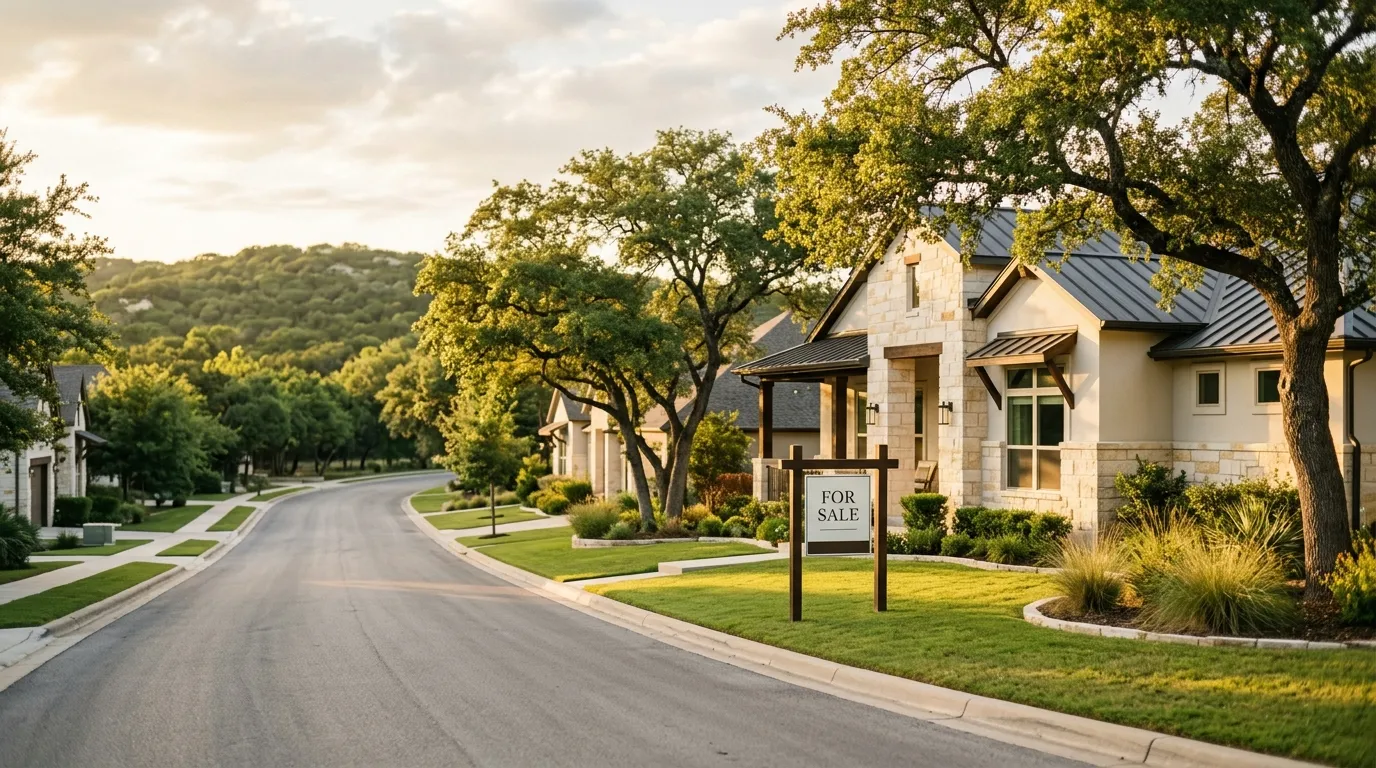
The Austin housing market in January 2026 looks different from the headlines of the last four years. Prices are not crashing. They are not screaming higher either. What the January data actually shows is a market finding a stable baseline after one of the most dramatic run-ups and corrections in any major U.S. metro.
I’m William Zhang, an Austin real estate agent with eXp Realty (TREC #811948). I track the Austin–Round Rock–San Marcos MSA numbers every month because that data is what separates a good decision from an expensive mistake. The January 2026 Austin housing market figures are worth understanding before you decide whether to buy, sell, or wait.
The headline numbers: median sales price at $400,495 (down 2.3% year-over-year), closed sales volume down 14.8%, 4.0 months of active inventory, homes averaging 89 days on market, and — the figure that surprised a lot of people — active rental lease listings up 47.3% with a median rent of $2,000.
Here is what those numbers actually mean in practice.
Median Price at $400,495 — Stabilization, Not a Slide
A 2.3% price dip sounds alarming if you bought at the 2022 peak when parts of this metro were touching $550,000+ median prices. In reality, the January 2026 median of $400,495 represents the market finding support, not continuing to fall.
For context: Austin metro median prices hit roughly $550,000 in mid-2022, then corrected back through 2023 and 2024. By late 2025 the numbers had largely stabilized. The January 2026 data continues that trend — the year-over-year decline is shrinking.
If you are a buyer looking at Round Rock, Cedar Park, or Pflugerville, this matters because it means you are not trying to catch a moving floor. Prices are hovering in a range. Negotiation exists. You can make a reasonable offer based on comps and expect a real response, not a counter at full ask with 12 competing offers behind you.
If you are a seller, it means overpricing will cost you. Homes that come to market at 5–8% above comparable sales are sitting. With 89 average days on market, buyers have the patience to wait you out or skip you entirely.
Closed Sales Down 14.8% — The Volume Story
Volume is the most misread number in any market update. People see “sales down 14.8%” and assume the sky is falling. What’s actually happening is more nuanced.
Transaction volume is lower because two things are true simultaneously: buyers are being more deliberate (they have more time with 89 DOM), and some sellers are not yet willing to price where the market actually is. That standoff reduces closed transactions without necessarily signaling a broken market.
The January data also reflects seasonality. January is historically one of the slowest months in Texas real estate. Families are not moving in January unless they have to. The comparison looks worse than the underlying trend because January 2025 was also a relatively sluggish month — the year-over-year base effect is compressing the decline.
What to watch: pending sales. Several county-level reports from this same period show pending sales ticking up, which means the closed count for February and March 2026 should recover some of that volume deficit.
4.0 Months of Inventory — A Genuinely Balanced Market
Four months of inventory is where most economists define the boundary between buyer’s market and seller’s market. Below 4 months, sellers have leverage. Above 6 months, buyers have it. At 4.0, you are negotiating on roughly even footing.
That said, inventory is not uniform across the metro. The City of Austin proper (Travis County) has been running tighter than the broader MSA — closer to 3.9 months per the January county breakdown. Williamson County (Round Rock, Georgetown, Cedar Park) and Hays County (Buda, Kyle) have been running slightly higher.
What this means for buyers targeting specific areas:
Travis County / City of Austin: Tighter supply, especially for move-in-ready homes under $600,000. Well-priced homes in 78704, 78745, and 78702 are still moving in under 60 days. You have negotiating room on price, but do not assume every seller is desperate.
Williamson County (Round Rock, Cedar Park, Georgetown): More inventory, longer DOM. Sellers here are competing against new construction, which creates real leverage for resale buyers. Builder incentives in Leander and Georgetown — rate buydowns, closing cost contributions — are also pulling some buyers away from resale.
Hays County (Buda, Kyle): The most buyer-friendly pocket of the metro. Median prices are $344,500 (per county-level January data), inventory is elevated, and there is significant new construction competing for the same buyer pool.
89 Days on Market — What That Actually Buys You
Eighty-nine days is a long time in real estate. For buyers, it means you can do things right:
- Schedule a general home inspection and negotiate on findings
- Bring in a structural engineer for any foundation flags, which is essential in Austin given the expansive clay soil across much of Travis and Williamson County
- Get a proper survey done
- Have your lender fully underwrite your pre-approval before you submit an offer
Buyers who waived inspections and surveys in 2021 to compete are still paying for some of those decisions. With 89-day average DOM, there is no reason to skip any of those steps in January 2026.
For sellers, 89 days means your pricing and presentation strategy matter more than ever. The buyers who are active right now are not emotionally driven. They are running spreadsheets. If your home has deferred maintenance, they will find it — and they will deduct for it, usually more aggressively than the actual repair cost.
Homes that are priced correctly and show well are still moving faster than the 89-day average. The average is being pulled up by the overpriced and the poorly prepared. A well-priced, clean, move-in-ready home in Round Rock ISD or Leander ISD school zones is not sitting 89 days.
The Rental Surge: Active Leases Up 47.3%
This is the number that most buyers should pay attention to. Active lease listings jumping 47.3% year-over-year with median rent falling to $2,000 tells a specific story: there are more rental options in Austin right now than the market can absorb at the rents landlords want.
Some of this is deliberate. Homeowners who could not get their asking price on a sale are choosing to lease instead — sometimes because they have a 2021-era mortgage at 3% and walking away from that payment makes no financial sense. The inventory of homes for lease increased partly because sellers converted listings to rentals rather than accept market pricing.
For buyers who are renting while they shop: this is actually good news. You have more options, better pricing leverage on your lease, and — critically — less pressure to rush into a purchase. If you need six more months to find the right house in the right school district, the rental market is not punishing you for waiting the way it was in 2022.
For the purchase market, rising rental inventory has a secondary effect: it keeps some would-be buyers in rental mode longer, which moderates demand slightly on the purchase side. That is part of why closed sales are down. It is not all bad news for buyers who are ready to move.
What This Means If You Are Buying in 2026
The January 2026 Austin housing market data supports a specific buyer posture:
Price below asking when the data supports it. Comps are your anchor, not the list price. With 89-day average DOM, sellers have had time to recalibrate expectations — but not all of them have. Pull the last 90 days of closed sales in the specific ZIP code and price accordingly.
Keep contingencies intact. The inspection contingency, the financing contingency, the appraisal contingency — these exist for your protection. You do not need to waive them in this market. Any agent telling you to waive them to be competitive in January 2026 is not giving you accurate advice.
Explore new construction in the suburbs. Builders in Georgetown, Leander, and Hutto are actively offering rate buydowns and closing cost incentives to move inventory. A 2/1 rate buydown on a $450,000 home can save you $400–$700/month in the first year. That is worth a 40-minute drive from Austin city limits for the right buyer.
Look at Pflugerville and Lakeway for value. Pflugerville (78660, 78653) offers solid Round Rock ISD schools with lower price points than Cedar Park or Round Rock proper. Lakeway offers Lake Travis ISD at a premium, but the new-build inventory in the Rough Hollow and Sunfield communities has been competitive.
You can search active Austin listings at lifeinaustintx.com — that is where I publish current MLS inventory. For a deeper conversation about where your budget fits in this market, reach out directly.
What This Means If You Are Selling in 2026
The January numbers do not favor sellers who are testing the market at aspirational pricing. Buyers are informed. They know the median is $400,495. They know homes are sitting 89 days. If you list at $475,000 when every comp in your neighborhood closed between $410,000 and $430,000, you will sit.
The sellers doing well right now are:
- Pricing within 2–3% of the most recent comps
- Coming to market with the home fully prepared (fresh paint, clean carpets, landscaping done)
- Offering to contribute to buyer closing costs upfront (rather than waiting for a lowball counter)
If you are deciding between selling now versus leasing the property, the math is more nuanced than the headline data suggests. Travis County lease inventory is up 88.5% year-over-year. That is a crowded rental market. You would be competing with a lot of other landlords for tenants, likely accepting $2,000–$2,100/month in rent. For some homeowners with low-rate mortgages, that still cash flows. For others, it does not — and the carrying cost of waiting for a better sale market may not pencil out.
The sell vs. lease question depends heavily on your specific loan balance, rate, tax situation, and time horizon. That is a conversation worth having before you list or sign a lease.
If you are thinking about your options, the Austin neighborhood guides are a good starting point for understanding where your property sits relative to current demand. For a direct conversation about pricing strategy, reach out here.
Frequently Asked Questions
What is the median home price in Austin in January 2026?
The median sales price across the Austin–Round Rock–San Marcos MSA was $400,495 in January 2026, a 2.3% dip from the same period last year. That decline signals stabilization, not a crash — prices are plateauing after the 2022–2023 correction, not continuing to fall.
How much inventory is there in the Austin housing market in 2026?
The Austin metro had 4.0 months of active inventory in January 2026. That sits in the range real estate economists define as a balanced market (4–6 months). It's down from the peak of 5–6 months seen in mid-2023, but still far above the 0.7–1.5 months of the 2021–2022 frenzy. Buyers have choices; sellers need to price competitively.
How long are homes sitting on the market in Austin in 2026?
The average days on market across the Austin MSA was 89 days in January 2026. That gives buyers time to do proper due diligence — schedule inspections, get a survey, have a structural engineer look at anything flagged. The sprint-to-close dynamic of 2021 is gone.
What is happening with Austin rental prices in 2026?
Median rent across the Austin MSA dropped to $2,000 in January 2026, and active lease listings surged 47.3% year-over-year. That rental supply spike is partly why some would-be buyers are choosing to rent a bit longer — more options, lower rents, and more time to find the right purchase.
Is the Austin housing market going to crash in 2026?
The January 2026 data does not support a crash scenario. Closed sales are down 14.8% year-over-year, but that reflects deliberate pacing by buyers, not collapsing demand. Pending sales in many county-level breakdowns are actually rising. A market with 4.0 months of inventory and a median that dipped only 2.3% is finding a floor, not sliding off a cliff.
Have questions about Austin real estate?
Reach out — I'm happy to help with your home search or sale.