6 Types of Austin Homes You Should Not Buy in 2026
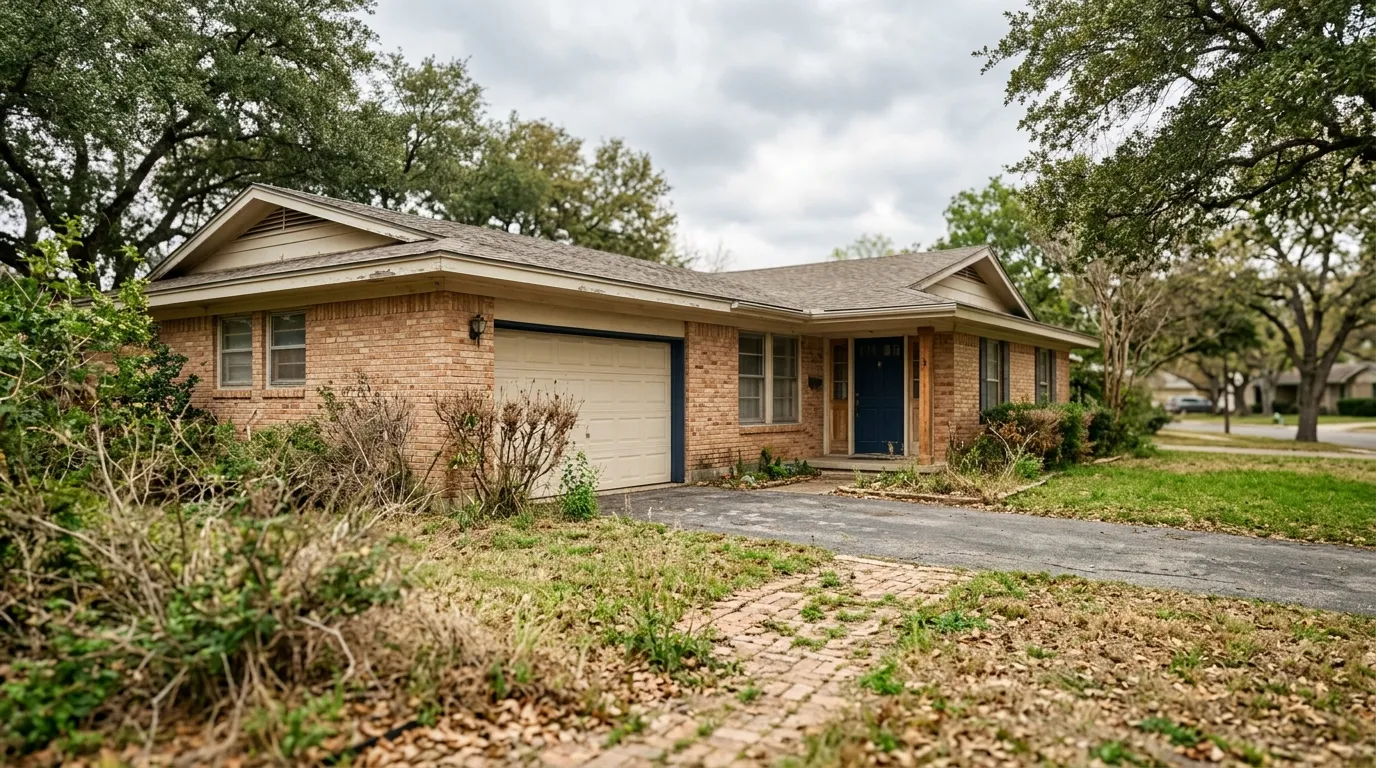
Every buyer loses sleep over paying too much. The more expensive mistakes in Austin real estate are not overpaying by $10,000 — they are buying the wrong type of property entirely. Those mistakes take years to surface and cost far more.
I’m William Zhang, an Austin real estate agent with eXp Realty (TREC #811948). Austin homes not to buy in 2026 is a topic I cover with every buyer client before we start touring, because the Austin market has specific failure modes that are not obvious to people relocating from other states. Six types of properties come up again and again in regret conversations.
Here is what each one looks like and how to identify it before you close.
1. High-MUD Outer Suburban Homes Where the Tax Math Doesn’t Work
Municipal Utility Districts are not universally bad. They exist because developers needed a financing mechanism to build infrastructure in undeveloped land, and in many cases they have funded genuinely good communities. The problem is when the MUD tax rate pushes your total effective property tax so high that the monthly payment stops making sense.
The outer-ring suburbs of the Austin metro — areas past Pflugerville (76574), outer Georgetown (78628, east side), Kyle (78640), Manor (78653), Hutto (78634) — frequently have MUD rates of 0.5–0.8% layered on top of county and city base rates. When you add those together, you can end up with an effective property tax rate above 2.8%.
On a $400,000 home at 2.8%: $11,200/year, or $933/month in taxes before you pay a cent toward principal, interest, or insurance.
Compare that to a home in an established Cedar Park neighborhood at 2.0%: $8,000/year, or $667/month. The difference is $266/month — $3,192 per year. Over a 10-year hold, that is $31,920 in additional taxes for living in an area with fewer amenities, longer commutes, and less infrastructure.
The homes to be most cautious about: new construction in master-planned communities more than 30 miles from central Austin, particularly if the MUD was recently formed and the bonds have decades of life remaining. The MUD rate does decline over time as bonds are paid off, but that takes 20–30 years in many cases.
What to do: ask the listing agent or search the Travis/Williamson/Hays county appraisal district for the property’s tax record. The full breakdown including MUD rates is on the county appraisal district websites. Cross-reference with the seller’s disclosure, which must note MUD status in Texas.
2. Homes with Active Foundation Movement on Expansive Clay Soils
Austin has two foundational soil types that buyers from outside Texas do not understand: expansive clay (primarily in central and south Travis County, eastern Williamson County) and limestone-caliche (Hill Country and western portions of the metro). Expansive clay is the one that causes the most problems.
Clay soil swells when it absorbs water and shrinks during drought. Central Texas drought cycles are severe — when the area goes six months without significant rain, as it does regularly, the soil can shrink dramatically. That movement puts cyclic stress on slab foundations.
Homes built on expansive clay with poor drainage, no foundation drip irrigation, and old gutters that direct water toward the foundation are the highest risk properties. The tell-tale signs during a walkthrough: sticking interior doors (especially in the center of the home), hairline cracks at door frame corners, visible sloping in hardwood or tile floors, and gaps where baseboards meet the floor.
A general home inspector will flag these issues as “monitor” items. That language is inadequate for Austin. If a general inspector notes foundation concerns, hire a structural engineer before closing — not after. A structural engineer costs $350–$500 and will tell you whether the movement is cosmetic (common in older Austin homes, often not a structural concern) or progressive (a real problem requiring piers at $1,500–$2,500 per pier, with typical repair jobs running $8,000–$40,000).
The homes at highest risk: pre-2000 construction in South Austin (78704, 78745, 78748), East Austin (78702, 78721), and established central Austin neighborhoods. Newer homes in these areas built on engineered foundations are lower risk, but still worth an engineer’s assessment if there are any indicators.
3. Pre-1990 Homes with Aging HVAC and Roof Systems
Austin summers are brutal. Average high temperatures in July and August sit above 100 degrees, and prolonged heat waves drive days of 105-107. An HVAC system that works adequately in Houston or Dallas fails in Austin because of the sheer duration and intensity of the cooling season. An Austin home runs its AC from May through October — six months of near-continuous operation.
A pre-1990 home that has not had HVAC and roof updates in the last 10 years is carrying a ticking clock. The two systems that fail most expensively in Austin are:
HVAC: A full system replacement (indoor air handler, outdoor compressor, ductwork inspection) in Austin runs $10,000–$20,000 depending on home size and system choice. A 30-year-old system that made it this far is on borrowed time. When it fails, it fails in August at 104 degrees.
Roof: Austin has been in the Hail Belt — significant hailstorms hit the metro multiple times per year. Roofs take a cumulative beating. A 25-year-old roof that has never been replaced likely has multiple layers of damage. Replacement runs $15,000–$35,000 depending on roof complexity and material choice.
The homes to look at with extreme caution: any pre-1990 property where the seller cannot produce documentation on when HVAC and roof were last replaced. Ask for this before the inspection, not during. If the answer is “original” for a 1987 build, you are looking at $25,000–$55,000 in deferred capital expenditure.
This does not mean never buy a pre-1990 home. Some of the best-located properties in Austin — central neighborhoods near walkable amenities and good school zones — are in older stock. It means pricing those needed replacements into your offer and into your first-year budget.
4. Properties in or Adjacent to FEMA Flood Zones
Austin’s topography creates real flood risk in specific areas. The Colorado River, Barton Creek, Bull Creek, Walnut Creek, and Onion Creek all have documented flood histories. FEMA flood maps show Zone AE (100-year flood plain) in many stretches along these waterways — and Zone AE means mandatory flood insurance if you have a federally-backed mortgage.
Flood insurance in Travis County for a Zone AE property runs $1,500–$4,000 per year through the National Flood Insurance Program, sometimes more for higher-risk properties. That is a real addition to your monthly payment that the Zillow estimate does not include.
More concerning: FEMA flood maps are often years behind actual flood history in fast-growing areas. New development upstream changes drainage patterns and flood risk even when the maps have not caught up. I have seen properties just outside Zone AE flood repeatedly during major rain events because the upstream watershed changed.
How to check: FEMA Flood Map Service Center (msc.fema.gov). Search by address. Also check the seller’s disclosure for flood history — Texas requires sellers to disclose whether the property has flooded, but that disclosure only covers the seller’s period of ownership.
Areas of elevated flood risk to research carefully in Austin: Onion Creek corridor in southeast Austin and Buda (historically severe flooding), parts of the Rundberg corridor in North Austin, sections along Barton Creek in 78736 and 78746, and creek-adjacent properties throughout East Austin.
5. HOA-Restrictive Communities That Limit Your Options
Some HOA communities in Austin are well-run, well-funded, and genuinely beneficial — shared amenities, maintained common areas, consistent curb appeal that supports home values. Others are liability traps that restrict what you can do with your own property and eventually hit you with special assessments when they run out of money.
The restrictive HOAs to avoid:
No-lease or short-lease provisions. Some Austin HOA communities prohibit rentals entirely or require minimum lease terms of 6–12 months. If you ever need to relocate for work, you cannot rent the property. That turns a depreciating market into a forced sale situation.
Underfunded reserve accounts. Request the HOA’s reserve study and current reserve fund balance before closing. A reserve study tells you what capital expenses are coming (roof replacement on the clubhouse, pool resurfacing, parking lot repairs) and how much the HOA should have saved. If the reserve fund is below 50% of the recommended balance, a special assessment is likely. Special assessments of $3,000–$15,000 per homeowner are not uncommon in underfunded communities.
Approval boards with unreasonable timelines. Some Central Texas HOA communities require board approval for exterior paint colors, fence replacements, landscaping changes, and driveway modifications — with approval processes that take 60–90 days and are frequently denied. If you are buying a home you intend to personalize, this is a quality-of-life issue that affects resale.
Most active gated communities in Lakeway, parts of Southwest Austin, and some of the higher-end Georgetown communities have well-funded HOAs with professional management. The problems tend to concentrate in older HOA communities from the 1990s and early 2000s where governance has been inconsistent.
6. Floor Plans with Limited Resale Appeal
This is the most underrated mistake buyers make in Austin. You are buying a home to live in, but you will eventually sell it — and when you do, the floor plan is the single hardest thing to change.
Floor plans that consistently slow resale in Austin’s suburban markets (Round Rock, Cedar Park, Pflugerville, Georgetown):
Two-bedroom homes in family-dominated neighborhoods. Families with children, who dominate buyer activity in Round Rock ISD, Leander ISD, and Pflugerville ISD communities, need three to four bedrooms. A two-bedroom home in a Pflugerville neighborhood of three and four-bedroom homes is fishing in a very shallow buyer pool.
Single-car garages in suburban communities. Families in the suburbs have two cars, bikes, lawn equipment, and storage needs. A one-car garage in a community of two-car garages stands out negatively on every home tour.
Master bedrooms at the front of the home facing the street. This is a layout issue that buyers increasingly notice. Privacy concerns — street noise, headlights through windows — make front-facing master bedrooms a turn-off in most suburban markets.
No separation between master suite and secondary bedrooms. Floor plans where all bedrooms are along the same wall with no separation between the master and kids’ rooms are a real quality-of-life issue for work-from-home buyers and families with young children. Buyers increasingly look for “split-bedroom” layouts where the master is on one side of the home and secondary bedrooms are on the other.
The worst combination: a two-bedroom home with a one-car garage and a master-facing-street floor plan in a suburban community. That property will be the last to sell in any market condition.
None of these six categories is an automatic deal-killer. Sometimes a flood-adjacent property at $80,000 below market price still makes sense if you price in the insurance and accept the risk. Sometimes a pre-1990 home with original HVAC is priced so correctly that replacing the system still leaves you ahead of market value.
The point is to know what you are buying before you close. The inspection period exists for this reason — use it fully. Keep your contingencies intact. Bring in specialists (structural engineer, roofing contractor, HVAC tech) for anything the general inspector flags.
Browse the neighborhood guides for Cedar Park, Round Rock, Pflugerville, Austin, and Lakeway to see where current inventory sits and what typical home types look like in each area. When you are ready to start touring with someone who knows what to look for, reach out directly. Active listings across the metro are at lifeinaustintx.com.
Frequently Asked Questions
What types of homes should buyers avoid in Austin?
The six types of Austin homes that most frequently lead to buyer regret are: homes in high-MUD-tax outer suburbs where the effective tax rate exceeds 2.8%, properties on expansive clay soil with existing foundation movement, homes with pre-1990 AC systems or roofs due for replacement, properties inside or adjacent to FEMA flood zones, homes in excessively restrictive HOA communities, and floor plans with low resale appeal (tiny second bedrooms, no flex space, single-story undersized layouts in family-oriented neighborhoods).
How do I check if an Austin home is in a flood zone?
Search the address on FEMA's Flood Map Service Center at msc.fema.gov. Zone AE is the high-risk 100-year flood plain where flood insurance is required for federally-backed loans. Zone X is lower risk. Also look at Travis County and Williamson County's own flood data — some areas flood regularly even when they are technically outside FEMA Zone AE, because the FEMA maps lag behind actual development patterns in fast-growing areas.
What is the risk with Austin homes on expansive clay soil?
Expansive clay soils contract during drought and expand when wet. That seasonal movement puts cyclic stress on slab foundations. Over 20–30 years, it can cause foundation settlement, cracked walls, sticking doors, and sloped floors. The risk is higher in older homes that have not been maintained (gutters, drainage, consistent soil moisture via foundation drip irrigation). A structural engineer assessment before purchase is essential if you see any signs of movement.
What makes an Austin HOA too restrictive?
HOA communities where you cannot rent the property (no lease provisions or short-term rental bans), cannot make exterior changes without multi-month approval processes, and have assessment budgets that are underfunded relative to upcoming major repairs (pool resurfacing, gate system replacement, parking lot repaving). Request the HOA financials — specifically the reserve fund balance — before closing. A reserve fund below 50% of the recommended balance is a sign of future special assessments.
What floor plans have the worst resale value in Austin?
Floor plans that consistently underperform in Austin resale: homes where all bedrooms are on the same wall with no separation (problematic for families where adults work from home), homes with a single-car garage in family-oriented suburban neighborhoods, master bedrooms positioned at the front of the home facing the street, and homes with only two bedrooms in neighborhoods where three-bedroom homes dominate. Buyers in Round Rock, Cedar Park, and Pflugerville are specifically looking for 3–4 bedrooms with a flex room — two-bedroom homes in those markets take significantly longer to sell.
Have questions about Austin real estate?
Reach out — I'm happy to help with your home search or sale.