Best Austin Suburbs 2026: Top 9 Ranked by Price & Schools
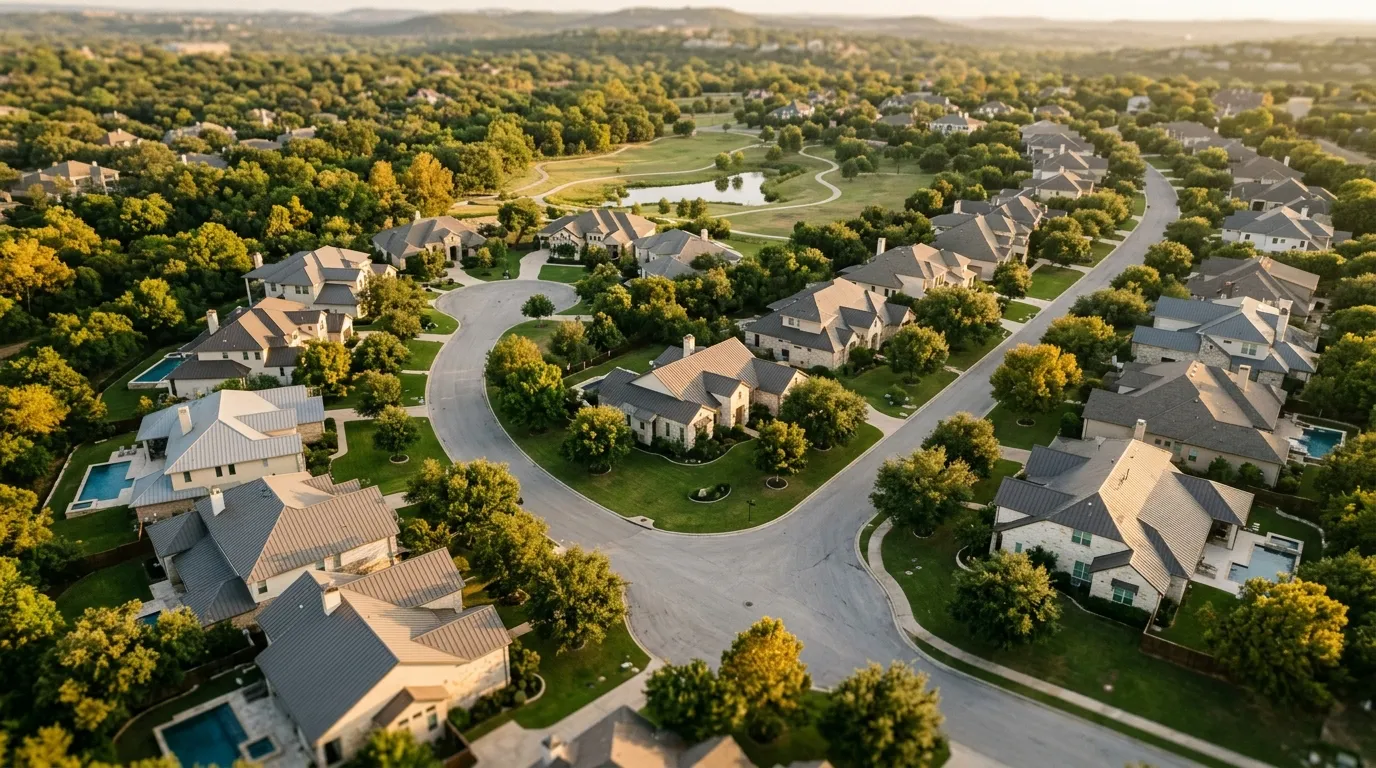
If you’re moving to Austin in 2026, here’s the hard truth: pick the wrong suburb and you can end up with sky-high property taxes, a commute that ruins your lifestyle, or a neighborhood that looks great on Instagram but feels completely wrong once you live there. Once you close, you’re stuck for the next 5-7 years.
I’ve been a real estate agent in Austin for over a decade. The single biggest lesson I’ve learned from helping relocation clients: the suburb you choose matters more than the house you buy. A great house in the wrong suburb is worse than an average house in the right one.
Here are the nine best Austin suburbs to move to in 2026, with honest pros, cons, and current prices. Not based on hype — based on what’s actually happening in the market right now and what I see working for my clients.
1. Cedar Park — The Safe, Balanced Choice
Cedar Park is one of the first suburbs people hear about when they research Austin, and there’s a reason. Great schools (Leander ISD), tons of amenities, a mix of mature neighborhoods with big oak trees and newer master-planned communities. It’s the suburb I recommend most often to families who want a balanced, low-risk move.
- Price range: mid $400Ks to mid $600Ks depending on age and size
- Commute to downtown: 25-30 minutes off-peak, 40-50 minutes in rush hour
- School district: Leander ISD (top-rated)
- Best for: families who want convenience, schools, and stability
The one thing I tell every Cedar Park buyer: watch the peak-hour traffic. 183 and Parmer Lane get backed up, so test the commute at 7:30 AM before you commit. See my Cedar Park neighborhood guide for the full breakdown.
2. Dripping Springs — Hill Country and Wide Open Space
Drive west from Austin and the scenery changes fast. Dripping Springs has rolling hills, wineries, wedding venues, and wide-open land. It’s peaceful, it’s beautiful, and it gives you breathing room you can’t get inside the city.
- Price range: $600K to $900K, with larger acreage properties going higher
- Commute to downtown: 35-45 minutes, longer at peak
- Best for: buyers who want space, scenery, and a slower pace
The trade-off is the commute. If you work downtown five days a week, those 35-45 minute drives add up fast. But if you work hybrid or remote and want Hill Country sunsets from your backyard, this is one of the most idyllic places in central Texas.
3. Georgetown — Growth, Community, and Value
Georgetown has transformed from a quiet historic town into a nationally-ranked suburb in about five years. Homes usually land in the $400K to $550K range, and you get everything from renovated craftsman homes near the historic square to large new-build communities like Wolf Ranch.
- Price range: $400K to $550K (more for Wolf Ranch)
- Commute to downtown: 35-50 minutes
- Best for: buyers who want space, community, and long-term growth potential
Sun City Georgetown is the biggest active-adult community in Texas, which means Georgetown has a unique mix of retirees and young families. I work with investors who watch Georgetown closely because the growth potential is real — the city is investing in amenities and infrastructure faster than almost any other Austin suburb.
4. Leander — Metro Rail, New Construction, Best Value
Leander is Cedar Park’s next-door neighbor, but it’s growing so fast it’s becoming a hub of its own. What most people don’t know: Leander has the MetroRail, which runs straight into downtown Austin without touching the highway. That alone makes it worth a look.
- Price range: $400K to $600K for new construction
- Commute to downtown: 40 minutes by car, or MetroRail
- School district: Leander ISD
- Best for: tech workers, buyers who want new construction at fair prices
A lot of my tech clients at Apple, Dell, and Samsung choose Leander because they get a bigger, newer home for the same price as something smaller in Cedar Park. If you’re open to new construction, Leander is currently one of the best value plays in the metro. See my post on affordable new homes in Leander for a specific community I tour.
5. Round Rock — The Mini City
Round Rock is basically a mini-city at this point. Home to Dell Technologies, Kalahari Resort, the Round Rock Express, IKEA, and the Premium Outlets. You can live your entire life in Round Rock without setting foot in Austin.
- Price range: mid $300Ks to mid $500Ks
- Commute to downtown: 25-35 minutes off-peak
- School district: Round Rock ISD (top-rated)
- Best for: families who want affordability, amenities, and a self-contained city
The one downside: I-35 runs through the middle of Round Rock, and rush hour gets messy. If you work at Dell, Nvidia, or Samsung’s north campuses, the commute is unbeatable. Full breakdown in my Round Rock neighborhood guide.
6. Pflugerville — The Underrated Pick
I actually live in Pflugerville, so I’m biased — but I’m biased because it’s genuinely the most underrated suburb in Austin. People assume it’s just the place between Round Rock and Austin, but once they spend a weekend here, they change their minds.
- Price range: high $300Ks to low $400Ks
- Commute: 20-30 minutes to almost every major tech employer
- Best for: buyers who want affordability without sacrificing convenience
What you actually get: multiple H-E-Bs, Costco, tons of parks, quick access to 130 and 45, and commute times to Apple, Dell, Tesla, and Samsung that are hard to beat from any other suburb. One story I tell often: I had a client who was set on Round Rock. When I ran commute maps to their offices (Apple and Samsung), Pflugerville saved them 15-20 minutes a day. They moved in and thanked me months later. See my Pflugerville neighborhood guide for the full picture.
7. Kyle — South Austin Value
Kyle has exploded over the last five years because it offers some of the most affordable homes within 30 minutes of South Austin.
- Price range: low $300Ks to mid $400Ks
- Commute to downtown: 30-40 minutes
- Best for: first-time buyers, South Austin workers, value hunters
What buyers love about Kyle: the neighborhoods feel peaceful while still being close to South Congress, South Austin, and even San Marcos. The only thing to watch is I-35 traffic during peak hours. If you work in South Austin, Kyle is one of the strongest value plays right now.
8. Buda — The AMD Corridor Play
Buda is Kyle’s sister city and similar in price, but it deserves its own entry because of what’s happening just south of it: the AMD campus. If you believe Austin’s tech future is moving south as well as north, Buda is a smart forward-looking choice.
- Price range: low $300Ks to mid $400Ks
- Commute to downtown: 25-35 minutes
- Best for: South Austin workers, AMD employees, buyers betting on south-side growth
Buda also has small-town charm that Kyle is slowly losing as it grows. The downtown square, the parks, the local restaurants — Buda still feels like a small town.
9. Lakeway — Lake Travis Luxury
Lakeway is luxury lake living. If you love boating, golfing, or just want an elevated Texas Hill Country lifestyle, this is it.
- Price range: mid $600Ks into the millions
- Commute to downtown: 30-45 minutes
- School district: Lake Travis ISD (top-rated)
- Best for: luxury buyers, boaters, executives, retirees
Lakeway is a lifestyle choice. If you don’t love the lake, the hills, or the longer commute, you might feel isolated out there. But if you do, there’s nothing like it — it feels like living on vacation year-round. Full details in my Lakeway neighborhood guide.
How to Pick the Right Austin Suburb for You
Nine suburbs, nine completely different personalities. After working with hundreds of relocation clients, here’s the biggest lesson I’ve learned: there is no one best Austin suburb. There’s only the best Austin suburb for your specific lifestyle.
Here’s the order of operations I give every client:
- Map your commute first. Where does everyone in your household work? Drive the commute at 7:30 AM before you fall in love with a house.
- School district matters more than the house. If you have kids or plan to, the district will shape your life more than any feature. Eanes, Lake Travis, Leander, and Round Rock ISDs are the top tier.
- Budget for property taxes. Texas has high property taxes (2-2.5%). A $500K home is more expensive to own than you think.
- Visit in person, not on Instagram. Suburbs look different in photos than in real life. Spend a weekend.
If you want help picking the right suburb for your situation, book a free relocation consultation with me or call me directly at (512) 766-3188. I’ll give you the honest answer — even if it’s “this suburb isn’t right for you.”
Frequently Asked Questions
What is the best suburb to move to in Austin, Texas in 2026?
For most relocation buyers, the best Austin suburbs in 2026 are Cedar Park (top schools, balanced value), Round Rock (self-contained city with top schools), Pflugerville (most affordable and most convenient to tech employers), Leander (best new construction value), and Lakeway (luxury Hill Country). The right choice depends on your commute, budget, and school needs — there is no single best suburb for everyone.
What is the most affordable suburb of Austin, Texas?
Kyle and Buda are currently the most affordable Austin-area suburbs, with median home prices in the low $300s to mid $400s and 25–35 minute commutes to downtown Austin. Pflugerville is the next tier, typically in the high $300s to low $400s, with much better commutes to tech employers. If you want a Leander ISD address, Leander itself offers some of the best new construction value in the metro.
Which Austin suburb has the best schools?
Westlake (Eanes ISD) has the top-ranked public schools in all of Texas. Lake Travis ISD (Lakeway area), Leander ISD (Cedar Park, Leander), and Round Rock ISD (Round Rock, parts of Austin) are the next tier of top-rated districts. If school district is your top priority, filter your home search by ISD first, then by house.
How far is Cedar Park from downtown Austin?
Cedar Park is about 18 miles from downtown Austin. The drive takes 25–30 minutes off-peak and 40–50 minutes during rush hour. The main routes are 183 and MoPac (Loop 1). Cedar Park is in Leander ISD, which is one of the top-rated districts in the Austin metro.
Is Pflugerville a good place to live?
Pflugerville is one of the most underrated suburbs in the Austin metro. It has affordable home prices (high $300s to low $400s), excellent commute times to Apple, Samsung, Dell, and Tesla (all under 25 minutes), multiple H-E-Bs and a Costco, tons of parks, and easy access to Toll 130 and Toll 45. For tech workers who want new construction without paying Cedar Park prices, Pflugerville is often the best value.
Where do tech workers live in Austin?
Tech workers in Austin typically choose Cedar Park, Leander, Round Rock, or Pflugerville for the commute to Apple, Dell, Samsung, and Tesla campuses. Those working at AMD's south Austin campus often live in Buda or Kyle. For workers who want a downtown Austin commute, Mueller, East Austin, and South Austin are popular urban options.
How much is a house in Round Rock, Texas?
The typical Round Rock home price in 2026 ranges from the mid $300s to the mid $500s, with newer master-planned communities like Paloma Lake and Teravista at the higher end. Round Rock ISD is one of the top-rated school districts in the Austin metro, which supports values.
Is Georgetown, Texas a good place to live?
Yes. Georgetown has grown from a quiet historic town into one of the fastest-growing suburbs in the U.S. Homes run $400K–$550K, it has a charming historic square, top-rated schools, and Sun City (the largest active-adult community in Texas). The main trade-off is a longer commute to downtown Austin — 35–50 minutes depending on traffic.
What is Lakeway, Texas known for?
Lakeway is known for its Lake Travis waterfront, resort-style living, top-rated Lake Travis ISD schools, and luxury home prices. Homes start in the mid $600s and go into the millions. Popular activities include boating, golfing (The Hills Country Club), and lake-view dining. It's a lifestyle-focused suburb — best for buyers who love the lake and Hill Country views.
Do Austin suburbs have property tax?
Yes. Texas has no state income tax, but property taxes are high — typically 2.0–2.5% of assessed value depending on the specific ISD and municipal utility district (MUD). A $500,000 home in a typical Austin suburb will run roughly $10,000–$12,500 per year in property taxes. Always factor this into your monthly payment calculation.
Is Dripping Springs, Texas worth the commute?
Dripping Springs is worth it if you value Hill Country views, wide-open space, and small-town charm. Homes run $600K–$900K+, and you get rolling hills, wineries, and peaceful neighborhoods. The trade-off is a 35–45 minute commute to downtown Austin. It's best for hybrid or remote workers who don't drive into the city daily.
How do I choose the right Austin suburb for me?
Start with your commute — map drive times from each suburb to where you actually work, tested during peak hours. Next, filter by school district if you have or plan to have kids. Then layer in budget (including property taxes) and lifestyle preferences (walkability, new construction, Hill Country views, lake access). Visiting the suburb in person for a weekend is the single best way to know if it fits.
Have questions about Austin real estate?
Reach out — I'm happy to help with your home search or sale.