7 Things Nobody Tells You About Moving to Austin TX
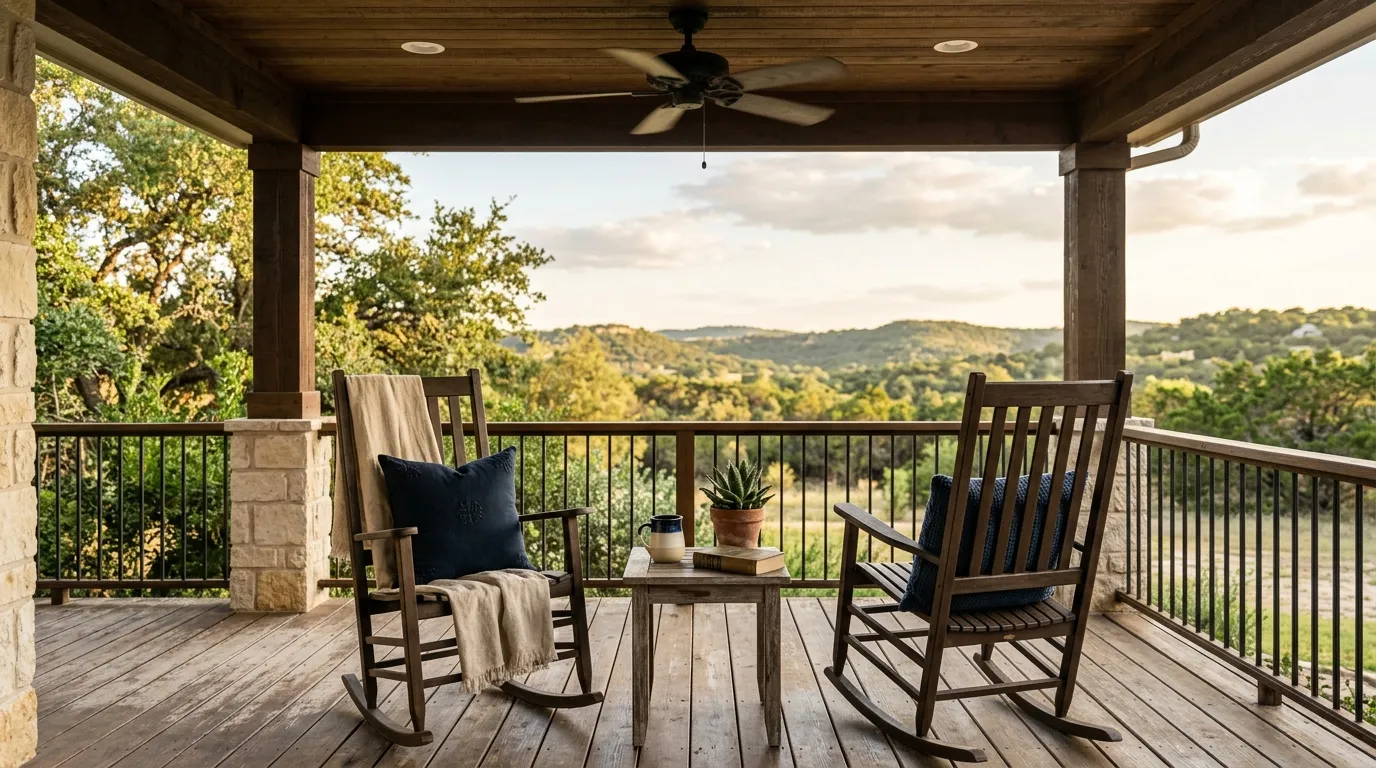
Austin gets marketed as a place that has it all: no income tax, great job market, affordable homes (relative to coastal cities), outdoor lifestyle, music scene, and friendly people. Most of that is true. What the relocation content rarely covers is the friction — the specific things that catch new residents off guard in year one.
As a local real estate agent with eXp Realty in Austin (TREC #811948), I work with relocation buyers every month. These are the seven things that come up most often in those conversations after clients have been here a year, usually along with the phrase “I wish someone had told me this.”
The living in Austin Texas truth is that it is a great place to live — but it is worth knowing what you are signing up for.
1. The Heat Is Not Just “Hot Summers”
Everywhere has hot summers. Austin summers are a different category.
From late June through early September, Austin regularly records 60–80 days above 100°F. The overnight low during this stretch typically stays at 75–78°F. This is not “hot afternoons” — it is continuous heat that makes outdoor activity genuinely difficult from roughly 9 AM to 7 PM daily for about ten weeks.
What this changes practically: your electric bill (more on that in a moment), your relationship with outdoor activities, and your social schedule. Runners and cyclists shift to 5–6 AM starts. Outdoor plans move to evening after 7 PM. Pool days replace hiking days from mid-June through August.
New residents from the Pacific Northwest or Midwest are often more shocked than those from Florida or Phoenix, because the humidity adds to the heat in a way that dry heat does not. Austin is not Phoenix dry — afternoon humidity in summer commonly runs 40–60%, which makes 102°F feel substantially worse.
One practical note: if you are touring homes or neighborhoods before making a purchase decision, do it in summer. Austin in October will give you a beautiful, optimistic impression. Do yourself a favor and visit in July before you commit.
2. Property Taxes Are Higher Than You Think — And They Rise Every Year
Texas has no state income tax, which is real and meaningful savings for most people. The offset is property taxes. Effective rates in the Austin metro run roughly 1.8%–2.8% depending on city, school district, and whether your property falls within a Municipal Utility District that layers in additional assessments.
On a $500,000 home, you are paying $9,000–$14,000/year in property taxes before the homestead exemption. Once you file the homestead exemption (which you should do immediately after closing — it is not automatic), your taxable value increase is capped at 10% per year. But Travis County and surrounding counties have been aggressive in appraising values upward to their maximum under that cap in recent years.
The surprise for many buyers is the first appraisal after purchase. If you buy new construction, the first-year tax bill is sometimes based on the unimproved lot value, not the completed home. Year two arrives with a full-value appraisal that can increase your payment by $300–$500/month compared to year one.
The Texas homestead exemption also reduces your taxable value by $100,000 for school district taxes — file it with your county appraisal district within the first year of ownership.
3. Cedar Fever Is Real and It Will Find You
Mountain cedar (botanically Ashe juniper) releases pollen in massive clouds over Central Texas from December through February. Austin is one of the worst cities in the country for cedar allergies.
The term “cedar fever” exists because the reaction can include low-grade fever, swollen eyes, severe sinus pressure, and fatigue — not just sneezing. People who have never had any allergies in their lives routinely develop cedar sensitivity after two or three Austin winters.
I see this come up in real estate decisions more than most people expect. Buyers who are already allergy-prone ask about it regularly. The honest answer is: if you have any existing allergies, budget for prescription allergy medication or allergy shots starting in your first December in Austin. Claritin and Zyrtec help but are usually not enough during peak cedar season.
The good news: cedar season ends in February. March through April in Austin is one of the best months of the year — bluebonnets, warm days, cool evenings, no pollen catastrophe.
4. Your Summer Electric Bill Will Be Larger Than Your Monthly Car Payment
This is the number-four item my clients wish they had known, and it is particularly impactful for buyers coming from the Pacific Northwest, Northeast, or Midwest where air conditioning is a minor expense.
A 2,000–2,500 sq ft home in Austin during July and August typically runs $250–$450/month in electricity. Larger homes with older insulation can hit $500–$700. This is not rare — it is the standard range for anyone keeping their home under 76°F during the day.
Factors that significantly affect summer bills: insulation quality (spray foam vs blown fiberglass), roof color (light roofs reflect more heat), HVAC age and efficiency (older systems work harder), and thermostat habits. New construction homes built in the last few years typically have much better energy profiles than resale homes from the 1990s–2000s.
When evaluating homes, ask the seller for the last 12 months of utility bills. This is completely reasonable, and the response will tell you a lot about the home’s energy efficiency. An energy audit is worth $200–$300 for any home with older HVAC or minimal insulation.
5. Water Restrictions Will Change How You Think About Your Yard
Austin Water imposes outdoor watering restrictions most summers. Stage 1 limits residential outdoor watering to two days per week. In dry years, Stage 2 cuts that to one day per week. Stage 3 restrictions — which Austin has implemented during severe drought years — can effectively prohibit most outdoor irrigation.
The practical impact depends heavily on your landscaping philosophy. If you want a lush green lawn year-round, Austin will fight you on it. The grass varieties that survive Austin summers without heavy irrigation — Buffalo grass, St. Augustine in shaded areas, Zoysia — go dormant or semi-dormant in summer anyway.
The buyers who do best with Austin yards are the ones who shift expectations: embrace xeriscape with Texas native plants (live oak, Texas sage, lantana, drought-tolerant grasses), gravel, and decomposed granite. These yards look intentional and require far less water. Buyers who try to maintain a Pacific Northwest or Midwest lawn aesthetic typically end up frustrated with water bills and HOA notices.
New construction homes in master-planned communities sometimes have HOA landscaping requirements that lock you into grass varieties that need frequent watering. Read the CCRs before closing.
6. Austin Traffic Is Worse Than the Rankings Suggest
Austin’s commute times appear in national worst-traffic lists, but the rankings understate how specifically concentrated the problem is.
I-35 through the urban core is functionally a parking lot during rush hour — southbound in the morning through downtown, northbound in the evening. There is no meaningful alternative. MoPac (Loop 1) is the best parallel route but hits its own bottlenecks at 183 and 2222. Highway 183 from the airport north is heavily congested throughout the day, not just rush hour.
The most overlooked traffic issue is neighborhood positioning. Two homes three miles apart can have 25-minute commute time differences based on which side of I-35 they are on. A home in Pflugerville heading northwest to the Domain area crosses 183 without touching I-35 — not bad. A home in East Austin heading to the Domain crosses I-35 during rush hour — that is a different situation entirely.
Before buying anywhere in the Austin metro, drive your actual commute at 7:45 AM on a Tuesday. Google Maps at noon will not show you what Tuesday morning looks like.
7. Construction Is Everywhere and It Does Not Stop
Austin is building at a pace that produces constant construction activity across the metro — road widening, new developments, utility work, highway expansion. This is partly positive (new infrastructure, new housing supply) and partly an ongoing quality-of-life tax.
The impact on buyers: what looks like a quiet street today may be adjacent to a permitted 400-unit apartment complex approved but not yet started. Checking the city’s development activity records and building permit database before purchasing is worth an hour of due diligence. I do this routinely for buyers in any area that has visible open lots nearby.
Construction also affects commute times — active road projects on major corridors routinely add 10–20 minutes to affected routes for 12–24 months at a time. The 183A/183 South tollway expansions, MoPac express lanes, and various I-35 improvement projects have all caused multi-year commute disruptions in their respective corridors.
None of these seven things are dealbreakers for most Austin buyers. The tax environment, job market, school districts, and outdoor lifestyle are real draws that hold up under scrutiny. The point is that a well-informed move is a better move.
The buyers who are happiest in Austin long-term are the ones who understood the trade-offs going in, chose their neighborhood based on actual commute testing rather than aesthetics, and budgeted honestly for property taxes and utilities.
If you want the full picture on a specific area, the Austin neighborhoods guide and the relocation overview cover the major areas with current price data and school details. For active listings, lifeinaustintx.com shows current inventory across the metro. And if you want to talk through a specific situation before committing to a neighborhood, reach out — these are exactly the conversations I have with relocation buyers every week.
Frequently Asked Questions
How hot does Austin actually get in summer?
Austin typically sees 60–80 days per year above 100°F, concentrated in late June through early September. The overnight low rarely drops below 75°F during this stretch, which means the heat is genuinely oppressive — not just hot afternoons. Plan your outdoor activities before 9 AM or after 7 PM from June through August.
What is cedar fever and how bad is it in Austin?
Cedar fever is an allergic reaction to mountain cedar (Ashe juniper) pollen, which releases in massive clouds across Central Texas every year from December through February. It causes eye swelling, sinus pressure, fatigue, and low-grade fever — hence the name. People who have never had allergies develop them after a few Austin winters. Over-the-counter antihistamines help, but many Austin residents require prescription-strength allergy medication or allergy shots for full relief.
How much are property taxes in Austin TX?
Effective property tax rates in the Austin metro run roughly 1.8%–2.8% of assessed value depending on the city, school district, and any MUD or utility district layers. On a $500,000 home, that is $9,000–$14,000/year. Texas has no state income tax, which partially offsets this for most households, but the property tax bill is real and will go up with each appraisal cycle.
How high are electric bills in Austin summer?
During peak summer months (July–August), Austin-area electric bills for a typical 2,000–2,500 sq ft home commonly run $250–$450/month depending on thermostat settings, insulation quality, and roof color. Newer homes with spray foam insulation and light-colored roofing fare significantly better. Older homes or homes with older HVAC systems can spike higher.
Does Austin have water restrictions?
Yes. Austin Water regularly imposes Stage 1 and Stage 2 drought restrictions during summer that limit outdoor watering to one or two days per week per address. In severe drought years, Stage 3 restrictions prohibit most outdoor irrigation. The Edwards Aquifer region and Highland Lakes reservoirs are the primary water supply, and they are sensitive to extended drought cycles.
Have questions about Austin real estate?
Reach out — I'm happy to help with your home search or sale.