Top Texas Cities With the Biggest Housing Correction
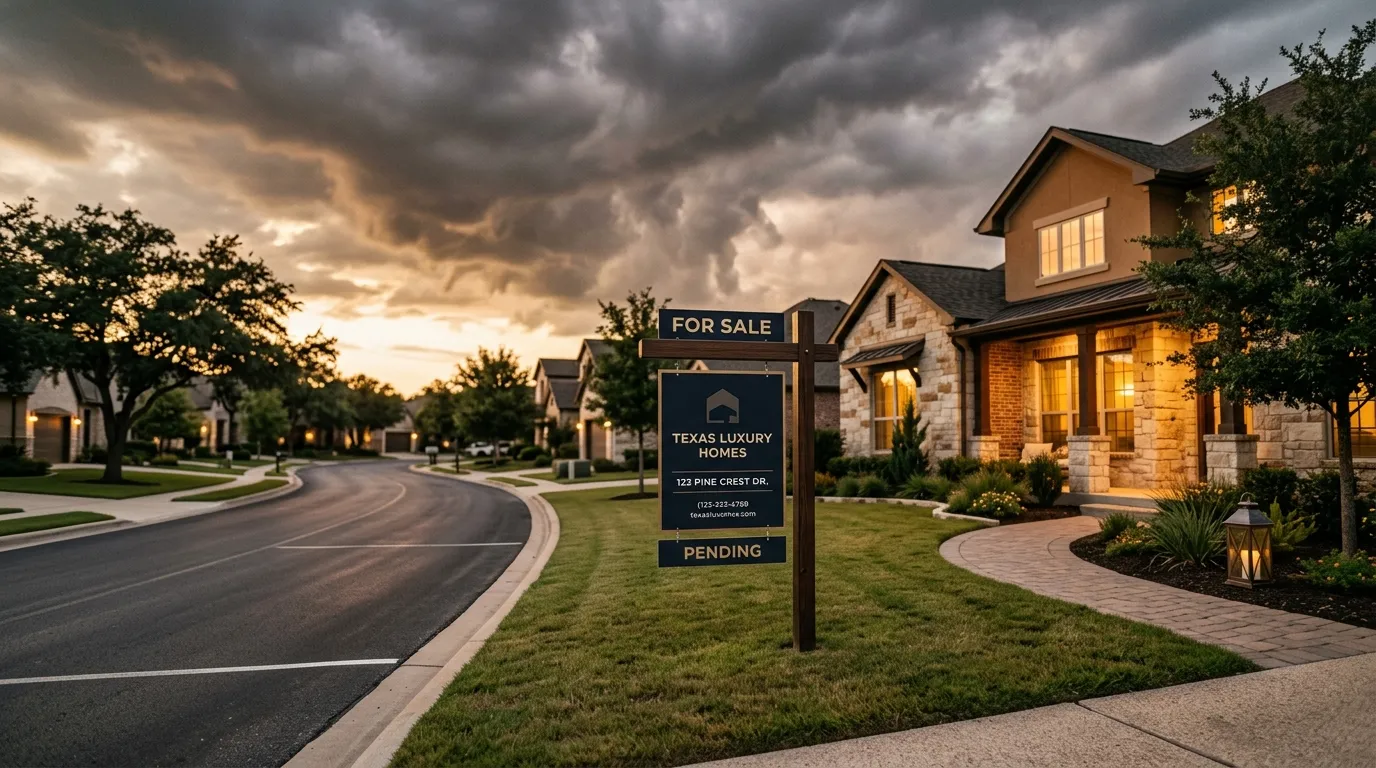
The Texas housing market shifted hard heading into 2025. Inventory surged, demand dropped, and prices started softening across every major metro in the state. For buyers, this has been the best market in years. For sellers who got used to the 2021-2022 bidding wars, it’s been a reality check.
I’m William Zhang, an Austin real estate agent (eXp Realty, TREC #811948). I track these numbers every week because they shape the advice I give my clients. Here are the ten Texas counties with the largest inventory surpluses and the biggest price corrections heading into 2025 — ranked from smallest to biggest.
Why Texas Prices Are Correcting
The setup is straightforward. From 2020-2022, interest rates were near zero, buyers flooded into Texas, and builders responded by starting huge volumes of new construction. Then rates spiked to 7-8% in 2023-2024, buyer demand collapsed, and all that new supply kept hitting the market with no one to absorb it.
On top of that, migration trends reversed. Texas gained roughly a million residents during the pandemic, but around half a million left the state in 2023 alone as the cost of living caught up to the appeal. The result: more supply, less demand, longer days on market, and price softening across the board.
10. Harris County (Houston Metro)
- Inventory surplus: 17.2% above 7-year average
- Active listings: ~14,970 homes
- Days on market: ~50 days (up from ~54 historic average — close to trend)
- Median price: rose from $213K (2020) to $281K, now softening
Harris County is softening but not crashing. Houston’s size and diversified economy give it more cushion than Austin or Dallas. Still, the inventory surplus and slowing price growth suggest buyers have real leverage in 2025.
9. Montgomery County (North Houston)
- Inventory surplus: 20.7% above 7-year average
- Active listings: ~3,819 homes
- Days on market: ~55 days (still below historical average)
- Median price: rose from $265K to $350K, now stabilized
- Overvaluation metric: 21.4%
Montgomery County is a suburban Houston area that saw heavy new construction during the boom. Overvaluation sits at 21.4%, which suggests meaningful downward pressure on prices if demand doesn’t recover.
8. El Paso County
- Inventory surplus: 23.5%
- Active listings: ~2,685 homes
- Days on market: ~64 days (at the 7-year average of 65)
El Paso’s inventory is only slightly above its long-term average, but the surplus metric is high because demand has fallen sharply. If buyers don’t step in, El Paso could see continued price softening into 2025.
7. Williamson County (North Austin)
- Inventory surplus: 25%
- Active listings: ~2,495 homes (up from ~800 at the pandemic low)
- Median price: peaked at $477K, now at $420K
- Days on market: ~75 days (up from ~31 at the peak)
- Overvaluation metric: peaked at 45%, now at 14.5%
Williamson County — home to Round Rock, Cedar Park, Leander, and Georgetown — has already absorbed a meaningful correction. Prices are down about 12% from peak, and days on market have tripled. For buyers, this is the kind of market where you can negotiate price, closing costs, and repairs. This is the Austin market I’m working in every day.
If you’re buying in Williamson County, read my 2026 Austin buying guide for how to structure your offer in a buyer’s market.
6. Collin County (Dallas-Fort Worth)
- Inventory surplus: 30%
- Active listings: ~3,600 homes (up from ~849 at pandemic low — 4-5x increase)
- Median price: rose from $347K to $515K
- Days on market: ~57 days (above historic 52-day average)
Collin County is the Plano / Frisco / McKinney area — one of the hottest DFW submarkets during the boom. Prices are still elevated relative to income and rent, and with 4-5x the inventory of the pandemic low, something has to give. I expect continued price softening in 2025.
5. Denton County (North Dallas)
- Inventory surplus: 34%
- Active listings: ~3,300 homes (up from ~888 at pandemic low)
- Median price: rose from $323K to $457K, with minimal correction so far
Denton County is north Dallas — Denton, Lewisville, Flower Mound. Prices haven’t really come down from the peak yet, which is why the surplus is so stark. Areas where supply has expanded but prices haven’t adjusted are the ones most likely to see corrections next.
4. Bexar County (San Antonio)
- Inventory surplus: 39%
- Active listings: ~7,683 homes (up from ~2,800 at pandemic low — 3x increase)
- Median price: rose from ~$200K to $271K, now at ~$257K
- Days on market: ~65 days (well above the 54-day average)
San Antonio was one of the most affordable major Texas metros, and it saw heavy investor activity. With days on market pushing 65 and inventory 3x the pandemic low, Bexar County is showing the clearest correction signs of any South Texas metro.
3. Dallas County
- Inventory surplus: 39.9%
- Active listings: ~6,485 homes (up 3.1x from pandemic low)
- Median price: rose from $227K to $300K in just two years
- Days on market: ~57 days (up from ~40 at peak)
- Overvaluation metric: 35.4% (peaked at 46%)
Dallas County — the urban core of DFW — has one of the highest overvaluation metrics in Texas. Prices rose faster here than the underlying fundamentals justified, and now the supply-demand gap is forcing a correction. I expect Dallas County to see one of the biggest price drops in the state through 2025.
2. Tarrant County (Fort Worth)
- Inventory surplus: 44.2%
- Active listings: ~5,700 homes (up from ~4,000 historic average)
- Median price: rose from $239K to $334K, now at ~$324K
- Days on market: ~54 days (above historic 47-day average)
Fort Worth’s inventory surplus is one of the worst in Texas. Prices have started correcting, but the surplus suggests there’s more downside ahead unless buyer demand recovers.
1. Travis County (Austin)
- Inventory surplus: 48.5%
- Active listings: ~5,100 homes (up from ~1,500 at pandemic low)
- Median price: peaked at $562K, now at $489K (down ~13%)
- Days on market: ~78 days (up from ~58 historic average)
- Rental rates: dropping from ~$2,292 to ~$2,143
Austin’s Travis County has the largest inventory surplus of any Texas metro and has already absorbed one of the largest price corrections. I’ve watched this happen in real-time as an agent in the market.
A big part of the Austin correction is investor behavior. Thousands of out-of-state investors bought Austin rentals in 2021-2022 expecting strong rent growth and appreciation. Instead, rents are falling because of oversupply (especially in condos and townhomes), and investors are selling to cut losses. That’s creating more supply and more price pressure.
For buyers, this is the best Austin market since 2019. You can negotiate price, closing costs, repairs, and rate buydowns. Sellers are motivated.
For sellers, pricing strategy is everything. Overprice by 2% and you’ll sit for 90 days. Price correctly and you can still get offers within 30.
What This Means for 2026
We’re now well into 2026, and the data has played out largely as expected. Dallas, Fort Worth, and Austin saw the clearest price corrections. Houston and San Antonio softened but held up better. For buyers, the window is still open — inventory is still above historical averages, and sellers are still more willing to negotiate than they’ve been in years.
If you’re thinking about buying in the Austin market right now, my 2026 Austin buyer’s guide covers exactly how to approach offers in this environment. And if you want a personal market assessment for your specific target neighborhood or ZIP code, reach out for a free consultation or call me at (512) 766-3188.
Frequently Asked Questions
Is the Texas housing market crashing in 2025?
The Texas housing market is correcting, not crashing. Most major metros (Austin, Dallas, Fort Worth, San Antonio) have seen home prices soften 5–15% from their 2022 peaks, inventory has risen 3–5x from pandemic lows, and days on market have doubled. A true crash usually requires a recession-driven collapse in demand, which hasn't happened. This is a significant correction, especially in Austin and Dallas, but not a 2008-style crash.
How much have Austin home prices dropped?
Austin (Travis County) home prices have dropped approximately 13% from the 2022 peak, from a median of about $562,000 down to $489,000 as of early 2026. Days on market have increased from 58 days (historic average) to 78 days. Active inventory is up roughly 3.4x from the pandemic low, giving buyers significantly more leverage than at any point since 2019.
Which Texas city has the biggest housing oversupply?
Travis County (Austin) has the largest inventory surplus in Texas at approximately 48.5% above the 7-year average. Tarrant County (Fort Worth) is second at 44.2%, followed by Dallas County at 39.9% and Bexar County (San Antonio) at 39%. These surpluses are driven by heavy new construction during 2020–2022 combined with slower buyer demand after interest rates rose.
Is now a good time to buy a house in Austin, Texas?
Yes, for most buyers. Austin is in a buyer's market with more inventory, longer days on market, and sellers willing to negotiate on price, closing costs, repairs, and rate buydowns. If you plan to hold the home for 5+ years and your finances support the monthly payment at current rates, 2026 is one of the strongest buying windows since 2019.
Why did the Texas housing market correct?
Three factors drove the correction: (1) interest rates rose from near-zero in 2021 to 7–8% in 2023–2024, collapsing buyer demand; (2) builders kept building through the demand drop, creating a large supply surplus; (3) about half a million people left Texas in 2023 alone as the cost of living rose. Austin was hit hardest because investor activity inflated prices beyond fundamentals.
Will Austin home prices drop more in 2026?
Further price softening is possible but the biggest drops appear to already be in. Median prices have stabilized around $489K after falling from $562K, inventory growth has slowed, and sellers have become more realistic on list prices. Most local agents (myself included) are advising buyers that waiting another year for a bigger drop is riskier than acting now given that builder incentives are peak-generous right now.
Which Texas counties have the highest overvaluation?
Based on 2024 data, Dallas County had the highest overvaluation metric at 35.4% (peaked at 46%), followed by Montgomery County at 21.4%. Williamson County (Austin) peaked at 45% overvaluation but has since corrected to about 14.5%. Overvaluation compares current home prices to long-term income and rent fundamentals, so high numbers indicate more downward pressure.
Are investors leaving the Austin housing market?
Yes. Many out-of-state investors who bought Austin rentals in 2021–2022 are now selling because rental rates have dropped (from roughly $2,292 to $2,143 per month for comparable units), property taxes are high, and condos/townhomes are sitting on the market longer. This is creating additional supply pressure that benefits owner-occupant buyers.
What is the difference between a housing correction and a housing crash?
A correction is a normal price adjustment of 5–15% driven by supply-demand imbalance. A crash is a sharp price decline of 20%+ driven by economic shock, forced selling, and collapsing credit. The 2008 crash saw 20–40% drops in many U.S. markets. Texas in 2024–2026 has seen corrections (5–15% drops) but not a crash — employment is strong, mortgage delinquencies are low, and there's no forced-selling wave.
Which Texas metro is the best for homebuyers in 2026?
Austin offers the best buyer leverage because of the largest inventory surplus and longest days on market. Dallas and Fort Worth are close behind. Houston and San Antonio are softer markets but with less downside adjustment. For relocation buyers, Austin remains the best balance of buyer leverage, job growth, and long-term price appreciation potential.
Have questions about Austin real estate?
Reach out — I'm happy to help with your home search or sale.