How Long Does It Take to Sell a Home in Austin?
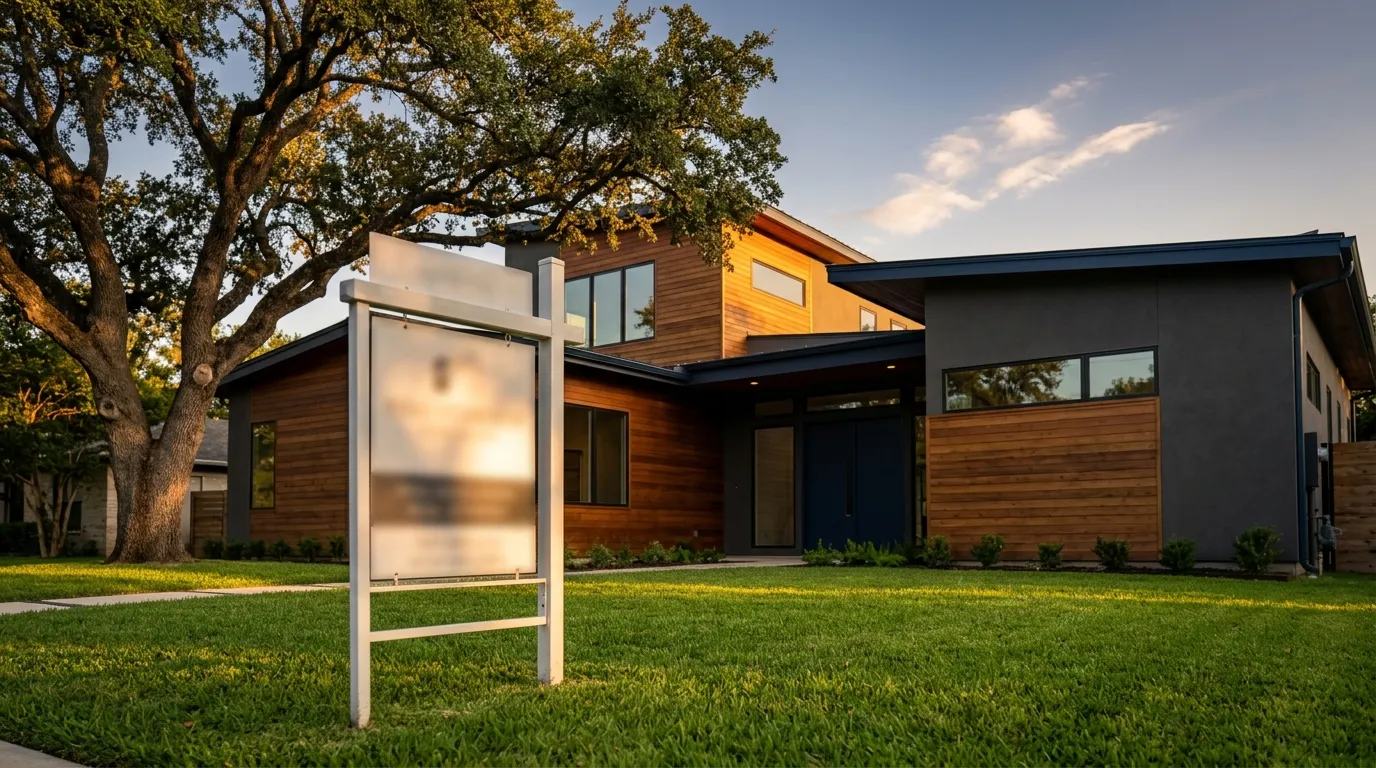
Bottom line: Austin homes are taking 50 to 60 days on market on average in 2026, up from 12 to 20 days at the 2021-2022 peak. From listing to keys handed over, expect 80 to 105 days total. Homes between $300K and $475K sell fastest (30 to 45 days). Homes over $750K take longer; homes over $1.5M can take 100 to 250 days. The biggest single accelerator is pricing right from day one — overpriced listings end up selling for less than correctly priced listings. This guide breaks down current market data by price band and neighborhood, plus the seller-side actions that actually move days on market.
William Zhang is an Austin real estate agent with eXp Realty (TREC #811948). I list and represent sellers across the Austin metro. This guide reflects what is actually happening on the seller side in 2026, drawn from current MLS data and my listings.
The Short Version
| Price Band | Median DOM (2026) | Notes |
|---|---|---|
| Under $300K | 20-35 days | Scarce inventory; FHA-friendly |
| $300K-$475K | 30-45 days | Strongest demand in 2026 |
| $475K-$650K | 45-60 days | Mainstream market |
| $650K-$900K | 55-75 days | Slower in MUD-heavy suburbs |
| $900K-$1.5M | 70-90 days | Variable by neighborhood |
| $1.5M-$3M | 80-150 days | Luxury, longer cycles |
| $3M+ | 100-250+ days | Highly variable |
From listing to closing day: add 30 to 45 days to the DOM number. A home that goes under contract on day 45 typically closes around day 80-90.
Austin Days-on-Market in Context
The Austin market has moved through three distinct phases:
2021-early 2022 (Boom): Homes sold in 7 to 20 days with multiple offers above asking. Median price climbed to ~$550K. Sellers wrote the rules.
Late 2022-2024 (Correction): Days on market climbed steadily. Median price retreated 15% to 18% from peak. Buyer leverage returned. New construction incentives expanded.
2025-2026 (Buyer-favored balance): Inventory elevated but stabilized. Median price has held around $440K. Days on market settled in the 50-60 day range. Negotiation is the norm.
A 55-day DOM does not mean homes are not selling. It means buyers can take their time, write thoughtful offers, ask for concessions, and walk away when something is wrong. Sellers who price correctly and present well are still completing transactions.
Days on Market by Neighborhood (May 2026)
These are typical ranges for properly priced homes:
Faster than average (25-45 days):
- Mueller
- Hyde Park
- Allandale
- Crestview
- East Cesar Chavez (smaller homes)
- North Loop
- Clarksville (under $1.5M)
- Travis Heights (under $1M)
- Round Rock established neighborhoods
- Cedar Park established neighborhoods (away from MUDs)
Average (45-65 days):
- South Austin generally
- Westlake under $2M
- Lake Travis area under $1.5M
- Inner Pflugerville
- Inner Round Rock
- Most resale homes in established suburbs
Slower than average (65-120+ days):
- New construction-heavy MUD areas competing with builder inventory (Manor, Hutto, parts of Liberty Hill)
- Luxury suburbs without lake or significant amenity ($1.5M+ Dripping Springs, $2M+ Lake Travis)
- Distant Hill Country exurbs
- Homes with deferred maintenance, foundation issues, or older mechanicals
- Homes with steep price expectations relative to comps
Why Pricing Right From Day One Matters
The single biggest seller-controlled variable affecting days on market is the initial list price. Here is the data:
Homes listed within 2% of eventual market value: Average DOM 35-50 days. Final sale price typically 96% to 100% of original list price.
Homes listed 3% to 7% above market value: Average DOM 60-90 days. Final sale price typically 91% to 96% of original list price. Almost always require at least one price reduction.
Homes listed 8% to 15% above market value: Average DOM 90-180 days. Final sale price typically 85% to 92% of original list price. Often have multiple price reductions and substantial market exposure that hurts perceived value.
The market reads price reductions as a signal. A home with three reductions in 60 days reads as “something is wrong with it” to buyers — even if the only thing wrong was the original price. Buyers and their agents will lowball more aggressively on a home that has been on market 90 days than one that has been on market 30 days.
In a buyer-favored market, the small premium you might capture by listing high is more than offset by the discount you take from extended DOM. Price right.
What “Right Price” Means in Practice
Pricing in Austin in 2026 requires looking at:
- Active comps: What similar homes are currently listed at. (Tells you the competition.)
- Sold comps in the last 90 days: Actual sale prices on similar homes. (Tells you the market.)
- Pending comps: Homes under contract but not closed. (Tells you the current pace.)
- Off-market comps: Withdrawn, expired, or cancelled listings. (Tells you what was too expensive.)
- Market trend: Whether prices are climbing, flat, or declining at the specific price point.
A good listing agent runs all five for your home before recommending a list price. The recommendation is a price range; you and your agent decide the specific number based on your timeline, your equity position, and how aggressively you want to price.
In a softening market, listing at the top of the range or above signals confidence but extends DOM. Listing at the middle or below the range often attracts faster offers, sometimes multiple. The “below market” strategy is a real lever — pricing a $510K home at $495K can attract 4 to 8 offers and net you a higher final price than listing at $525K.
The Five Seller Actions That Move Days on Market
These have evidence behind them. Most listings under-invest in two or more.
1. Pre-list inspection ($400-$700).
Have a licensed inspector walk your home before listing. Address the obvious issues (loose handrails, missing GFCI outlets, deferred maintenance) and provide the inspection report to buyers. Two effects:
- Builds buyer confidence. Buyers know what they are getting.
- Reduces option period negotiation. Most repair-credit asks happen because the inspector finds something the seller did not know about.
I have listings where the pre-list inspection reduced negotiation time from 5 days to 1 day and saved $5K to $15K in seller concessions.
2. Professional photography (non-negotiable).
Phone photos do not work in 2026. A professional real estate photographer ($250-$500) produces 30 to 50 images with proper lighting, wide-angle composition, and color correction. Listings with professional photos get 30% to 50% more online views than listings with phone photos.
A 3D tour (Matterport or similar, $200-$400) adds substantial value, especially for relocating buyers. Drone exterior shots ($150-$250) help on homes with significant lot, pool, or views.
3. Pre-list cosmetic prep.
The highest-ROI seller prep:
- Paint: Off-white or warm neutral paint on any bold-colored walls. ($1,500-$3,500 typical.)
- Carpet: Replace stained, worn, or pet-affected carpet. ($1,500-$4,000.)
- Decluttering: Most homes show better with 30% to 50% of the furniture and personal items removed. Rent a storage unit for the listing period.
- Lighting: Replace any non-functional or yellow-light bulbs. Bright, warm-white LEDs throughout.
- Yard: Mow, edge, mulch, trim. Curb appeal matters more than any other single visual.
Avoid: major remodels you cannot finish before listing. Half-finished renovations are worse than not renovating.
4. Aggressive online marketing.
Beyond MLS, listings should be on Zillow, Redfin, Realtor.com, Trulia, and Homes.com (most flow automatically from MLS). Active social media promotion through your agent — Facebook, Instagram, sometimes TikTok — drives additional eyeballs. Some Austin agents (mine included) run paid Facebook and Google ads for listings.
5. Be FHA and VA friendly.
Most buyers under $475K in Austin use FHA or VA financing. Homes that meet FHA appraisal standards (no peeling paint, working systems, no major safety issues) qualify for these buyer pools. Homes that fail FHA appraisal cut your buyer pool by 30% to 50%.
For homes over $475K, conventional buyers dominate but FHA-friendliness still matters because some conventional buyers also have credit profiles that look FHA-like.
When Concessions Beat Price Reductions
In a buyer’s market, buyers often want help with closing costs, rate buydowns, or repair credits more than they want a lower list price. Math:
- $10K price reduction: Reduces your sale price by $10K. Reduces buyer’s loan by ~$10K, which reduces their monthly payment by ~$60.
- $10K closing cost concession: Same hit to your bottom line ($10K). But the buyer applies it to their closing costs, which means they bring $10K less to closing. Or they apply it to a rate buydown, which reduces their monthly payment by $100-$200.
For most buyers, the concession is more valuable than the equivalent price reduction. For sellers, the cost is the same. Negotiate concessions before reducing price.
Common concessions in 2026:
- 2-1 rate buydown: Buyer’s rate is 2% lower in year 1, 1% lower in year 2. Costs the seller roughly 2% to 3% of the loan amount.
- Closing cost credit: Direct credit at closing, often $5K to $15K.
- Home warranty: First-year home warranty paid by seller ($500-$700).
- Repair credit: Cash at closing for buyer to address inspection items themselves.
When to Reduce Price
If you have been on market 30 days with no offers and limited showings, the issue is almost always price. Common patterns:
- Showings but no offers: Buyers are seeing the home but not enough value. Reduce 3% to 5%.
- Limited showings: Search-result presentation problem. Could be price, photos, or description. Reduce 2% to 4% AND review presentation.
- Offers, but well below ask: Buyers think the home is overpriced. Either accept negotiated offers or reduce.
- No showings: Major presentation or price problem. Reduce 5% to 8% and refresh photos.
Reduce in meaningful increments. A $5K reduction on a $750K home is not noticeable. A $25K reduction is. Buyers waiting on the sidelines notice meaningful reductions and re-engage. Token reductions feel desperate without changing behavior.
The Selling Timeline From the Seller’s Side
Typical Austin sale, May 2026 listing:
Pre-listing (Days -30 to -1):
- Choose listing agent.
- Complete pre-list inspection and address findings.
- Professional photography and prep.
- Final pricing decision.
- MLS goes live.
Listing live (Days 1-50, typical DOM):
- Active showings.
- Open houses (typically first 2 weekends).
- Buyer feedback and follow-up.
- Price reduction(s) if needed.
- Offers come in.
Under contract (Days 50-90):
- Option period (5-10 days). Inspection, negotiations.
- Appraisal (days 7-14 of contract).
- Underwriting (days 14-35).
- Final walk-through (day before closing).
- Closing.
Post-closing:
- Move out (must be done by closing day or per contract).
- Cancel utilities, change forwarding address.
Common Seller Mistakes in 2026
- Pricing for 2022, not 2026. The 2022 peak is not coming back soon. Price for the current market.
- Skipping the pre-list inspection. Issues found in buyer inspection often cost more in negotiation than the inspection cost.
- Refusing to negotiate. In a buyer’s market, refusing concessions extends DOM and ends up costing more in the eventual reduction.
- Pulling and re-listing to reset DOM. MLS often shows full listing history. Buyers see through this.
- Renting out the home rather than selling. The math rarely works in Austin in 2026 at current rent-to-price ratios. See our sell or lease guide.
- Choosing the agent who promises the highest price. Some agents over-promise to win listings, then push for reductions. Choose the agent whose pricing rationale you understand and trust.
Frequently Asked Questions
What is the difference between “days on market” and “cumulative days on market”? DOM is the current listing’s days. CDOM includes prior listings of the same property within the past few years. Buyers and agents see both. A high CDOM signals previous failed attempts and can hurt your negotiation position.
Should I leave when buyers tour my home? Yes. Buyers cannot have honest conversations about your home while you are present. Plan to be away during showings and open houses.
Can I sell my Austin home without a realtor? You can list FSBO (for sale by owner) on Zillow and a few other portals, but you cannot list directly on MLS without a license. Without MLS, you lose 80%+ of buyer visibility. Most FSBO sales sell for materially less and take longer.
What if my home does not sell? Listings typically run 6 months in Austin. If you reach 6 months without selling, you can extend, re-list with a different agent, withdraw, or convert to a rental. Most homes that do not sell were priced too high.
Are there ways to sell my home for cash, fast? Yes — iBuyers like Opendoor and various local “we buy houses” companies. They typically offer 75% to 90% of true market value in exchange for a fast (7-21 day) close. Useful in situations where speed matters more than price.
How do I calculate my home’s value? Get a free CMA (comparative market analysis) from a listing agent. Online estimates (Zillow Zestimate, Redfin Estimate) are within 5% to 15% but not as accurate as a CMA from an agent who has walked your block.
Working With William Zhang
I price aggressively but realistically based on actual current market data, pre-list every listing for inspection, invest in professional marketing on every property, and negotiate concessions to net you the highest price in the shortest time. My typical Austin listing in 2026 sells in 35 to 55 days from a properly priced launch.
Reach out at (512) 766-3188 or through the contact form. I work the full Austin metro at eXp Realty (TREC #811948).
Frequently Asked Questions
How long does it take to sell a home in Austin in 2026?
Austin homes are taking 50 to 60 days on market on average in 2026, up from 12 to 20 days at the 2021-2022 peak. That is the time from listing to going under contract. Add another 30 to 45 days for closing once under contract, so the typical Austin home sale takes 80 to 105 days from listing to keys handed over. Price band, neighborhood, and condition drive significant variation: well-priced homes in walkable central neighborhoods often sell in 25 to 40 days; homes over $1M in less-desirable areas can take 90 to 180+ days.
Why are Austin homes taking longer to sell in 2026?
Three reasons. First, the 2026 Austin market is a buyer's market — inventory is up roughly 60% from 2022 lows, giving buyers more options and negotiating power. Second, mortgage rates in the 6% to 7% range have suppressed buyer demand compared to the 2020-2021 sub-3% rate environment. Third, Austin home prices have softened roughly 15% to 18% from the 2022 peak, so many sellers initially list at aspirational prices and end up reducing during the listing period, extending days on market.
What is the fastest-selling price range in Austin?
Homes priced between $300,000 and $475,000 sell the fastest in 2026 — typically 30 to 45 days on market. This is the price band with the most first-time buyer activity, the most FHA-eligible inventory, and the strongest demand relative to supply. Homes priced under $300,000 are scarce and often sell in under 30 days when they appear. Homes over $750,000 take longer (60 to 100+ days), and homes over $1.5M can take 100 to 250 days depending on neighborhood and uniqueness.
What is the slowest-selling part of Austin?
Outer suburbs with high inventory of new construction (Manor, Hutto, parts of Leander, Liberty Hill) often have the slowest resale market in 2026 because they compete directly with builder inventory that has aggressive incentives. Newer suburban resales in MUDs face the same MUD-tax pressure that any buyer would face — combined with builder incentives across the street, resale homes can sit 90 to 150 days unless aggressively priced. Higher-end luxury homes ($2M+) in less-established neighborhoods also move slowly.
How can I sell my Austin home faster?
Five things. First, price right from day one — homes priced 5% to 10% above market often see significant DOM and end up selling for less than if they were priced correctly initially. Second, pre-list inspection — get the home inspected before listing, fix the obvious issues, and provide the report to buyers to build confidence. Third, professional photography and a 3D tour — non-negotiable in 2026. Fourth, accept FHA and VA offers if your home qualifies — most buyers under $475K use these programs. Fifth, be willing to offer concessions (closing cost credit, rate buydown, repair credit) rather than reducing price — concessions often help your bottom line.
Is it a bad time to sell a home in Austin in 2026?
It is a more challenging market than 2021-2022 but not a bad time to sell. Median home prices are down about 18% from the 2022 peak, but prices stabilized in late 2025 and have held steady in 2026. Inventory is up but homes still sell when priced correctly. Sellers who need to sell are completing transactions; sellers who want top-dollar 2022 prices are not. If your purchase price was below today's market, you are still selling at a meaningful gain. If you bought in 2021-2022, you may need to bring cash to closing depending on your equity position.
Should I sell my Austin home in spring or fall?
Spring (March to May) traditionally has the most buyer activity and the highest prices in Austin, with peak listing competition in May. Fall (September to November) has less competition from other sellers but slightly less buyer demand. For most sellers, late February through April listings perform best. December is the slowest period; January starts picking up. If you can wait for the seasonal pattern, spring is the better seasonal window. If you need to sell at any other time of year, the right price and right marketing still work.
Should I sell my Austin home or rent it out?
Run the math both ways. In 2026 with median rents around $2,000 to $2,800 for single-family homes, the rent-to-price ratio in Austin is roughly 0.5% to 0.7% per month — meaning a $500K home typically rents for $2,500 to $3,500. After mortgage, taxes, insurance, HOA, vacancy, and maintenance, many Austin landlords are cash-flow negative unless they have substantial equity. Renting makes sense if you expect long-term appreciation and can absorb negative cash flow. Selling makes sense if you need the equity or want to exit. See our full sell-or-lease analysis for the framework.
Have questions about Austin real estate?
Reach out — I'm happy to help with your home search or sale.